
By 60, a lot of women notice their hair just doesn’t behave the way it used to — it can feel thinner on top, drier at the ends, or like it loses its shape within an hour of leaving the house. If you’ve found yourself reaching for the same low bun or ponytail because nothing else seems to hold, that frustration is completely normal.
The reassuring part is that you don’t need a bold, unfamiliar chop to fix it — a few smart layers, cut in the right places, can bring back movement, lift, and shape with almost no daily effort. This roundup rounds up 29 short layered hairstyles designed to make fine, aging hair look effortlessly full again.
1. Classic Layered Pixie Cut
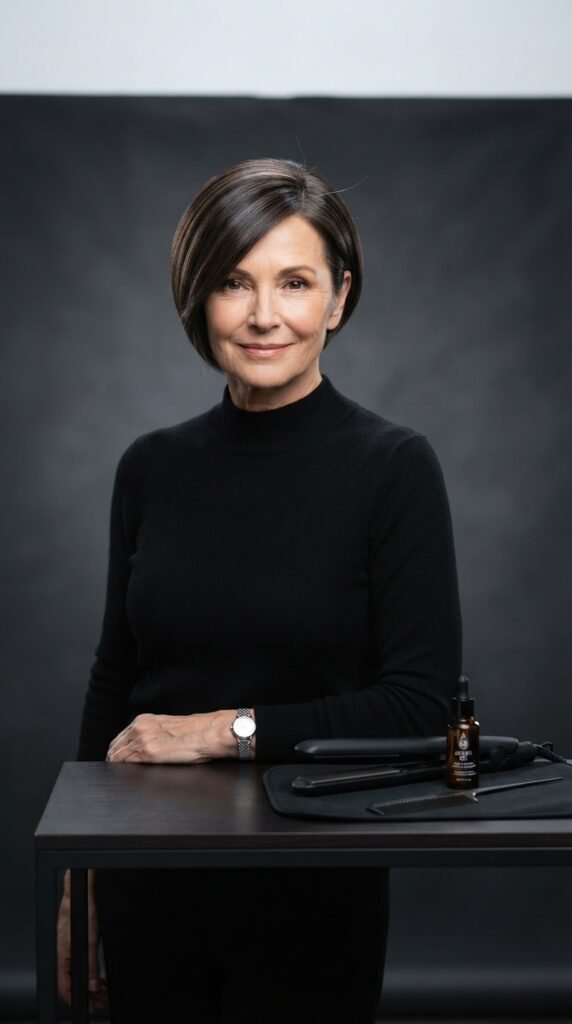
Why it works: Short layers throughout a pixie remove the weight that drags fine hair flat, letting each section stand up and read as fuller than it actually is. The rounded shape also softens the jawline as skin naturally loses some firmness with age.
Ask for: Ask for “a layered pixie, textured with a razor at the crown for lift.”
2. Textured Crop with Side Fringe
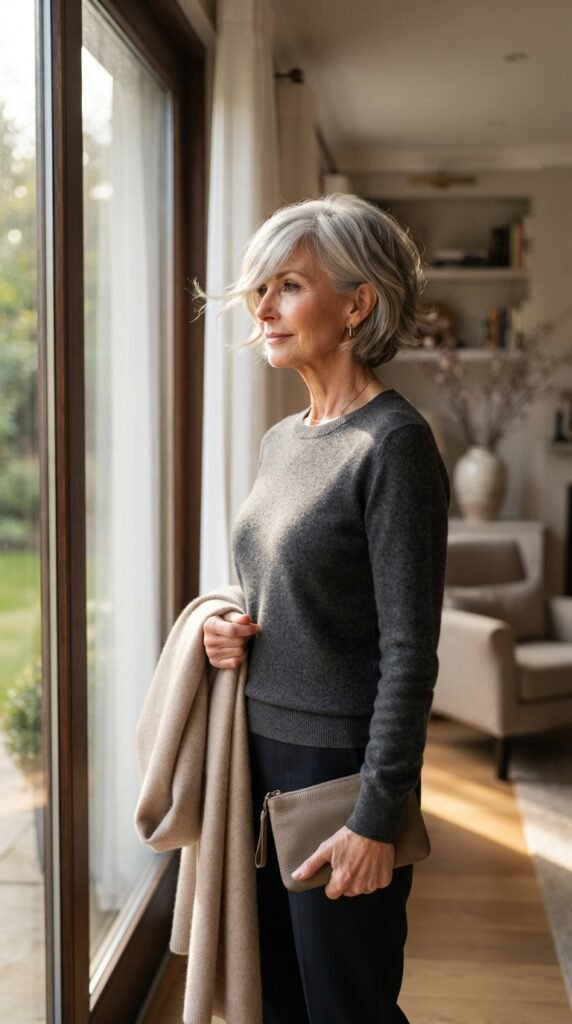
Why it works: The choppy texture throughout a crop breaks up any flat patches that come with finer, aging hair, while the side fringe softens the forehead without adding heavy weight up front. It’s an easy shape to style with just fingers and a little product.
Ask for: Ask for “a textured crop, point-cut throughout, with a side fringe left long enough to sweep.”
3. Feathered Pixie with Soft Bangs
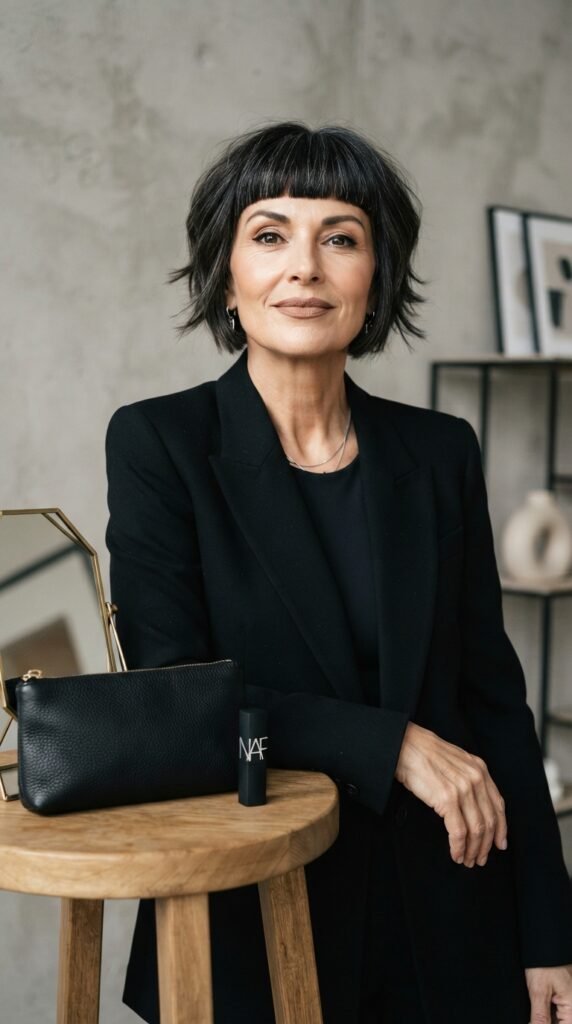
Why it works: Feathered layers taper gently instead of ending in a blunt line, which keeps a short cut from looking stiff or helmet-like on fine hair. Soft bangs continue that same gentle movement right down to the eyebrows for a cohesive, youthful finish.
Ask for: Ask for “feathered layers cut with a razor, and soft bangs blended, not blunt.”
4. Short Shag with Piecey Layers
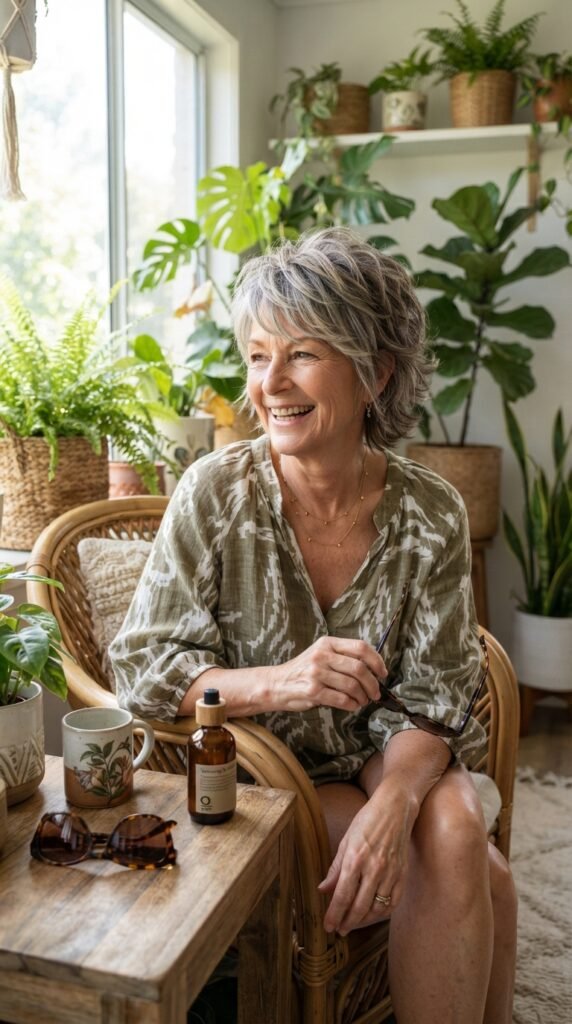
Why it works: The disconnected, choppy layers of a shag create texture that tricks the eye into seeing more density, which helps enormously when hair has thinned with age. Because it’s meant to look undone, it also hides regrowth and cowlicks better than a sleek cut.
Ask for: Ask for “a short shag, razor-textured throughout, left piecey rather than smoothed.”
5. Tapered Pixie with Undercut Sides
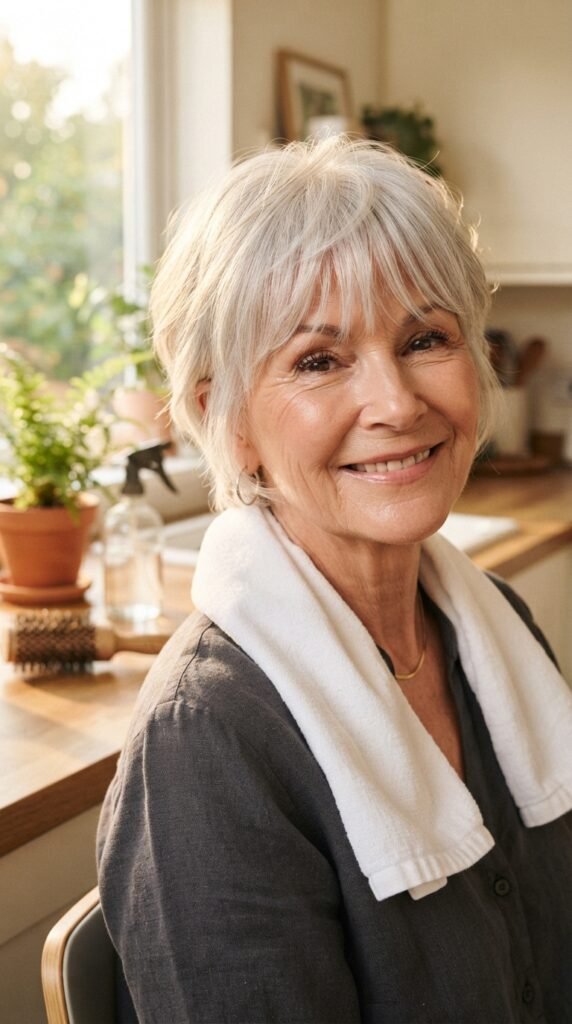
Why it works: Tapering and undercutting the sides removes bulk that can make fine hair look thin and stringy near the ears, while leaving more length and layering on top for movement and lift. It’s a modern, low-maintenance shape that grows out cleanly.
Ask for: Ask for “clipper-tapered sides with longer, layered length left on top.”
6. Layered Crop with Root Volume
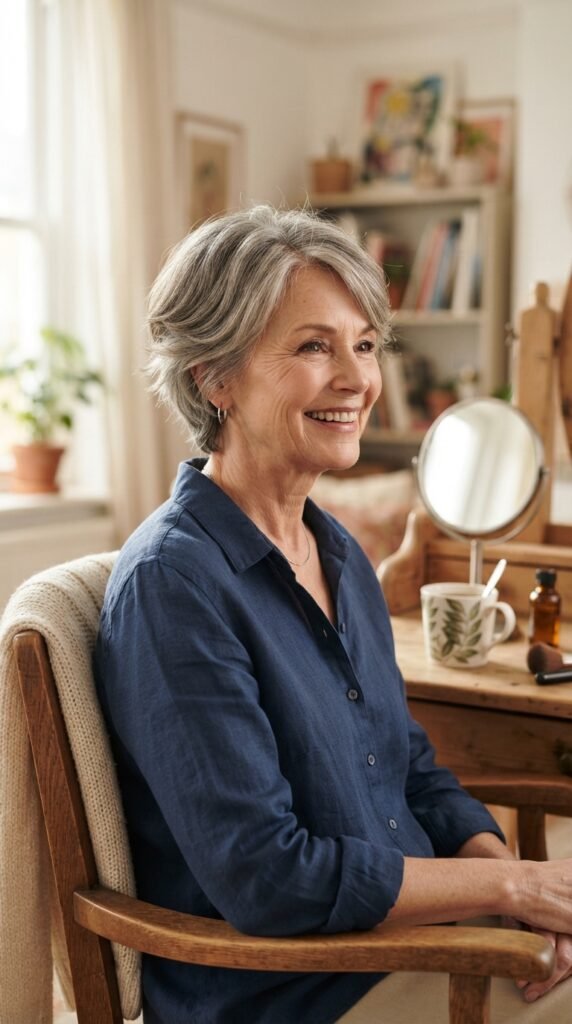
Why it works: Lifting the roots at the crown directly counters the flatness that often comes with thinner, more mature hair, and the layered crop shape holds that lift for hours rather than collapsing quickly. It looks full from the front and from behind.
Ask for: Ask for “a root-lift blow-dry with a diffuser or round brush at the crown.”
7. Wavy Short Layers with Side Part
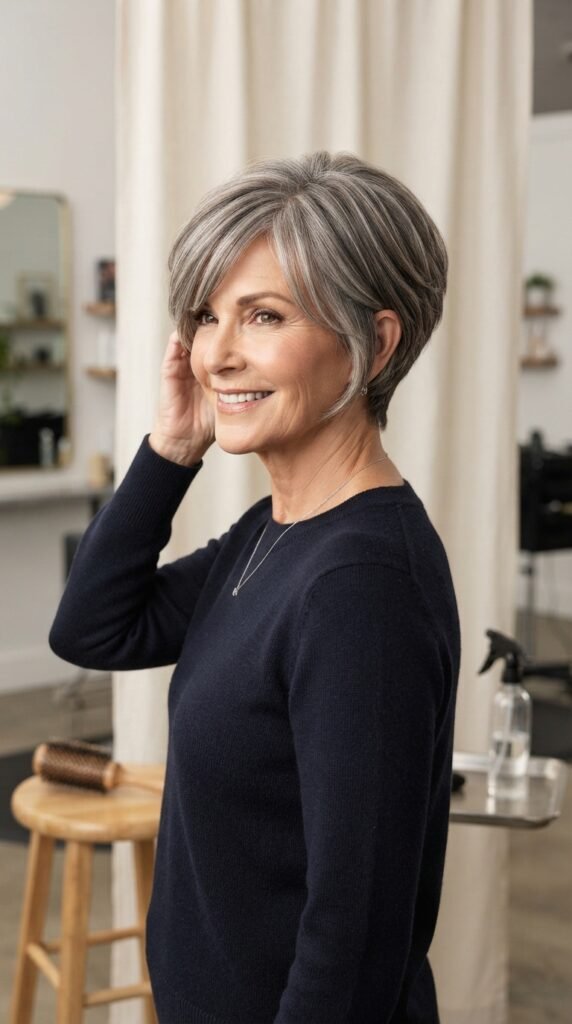
Why it works: A deep side part adds asymmetry that flatters most face shapes and creates extra volume along the parting line, exactly where thinning often shows first. Soft waves through the layers add movement so the cut doesn’t look stiff or over-set.
Ask for: Ask for “loose waves set with a small curling wand and a deep side part.”
8. Choppy Pixie with Long Top
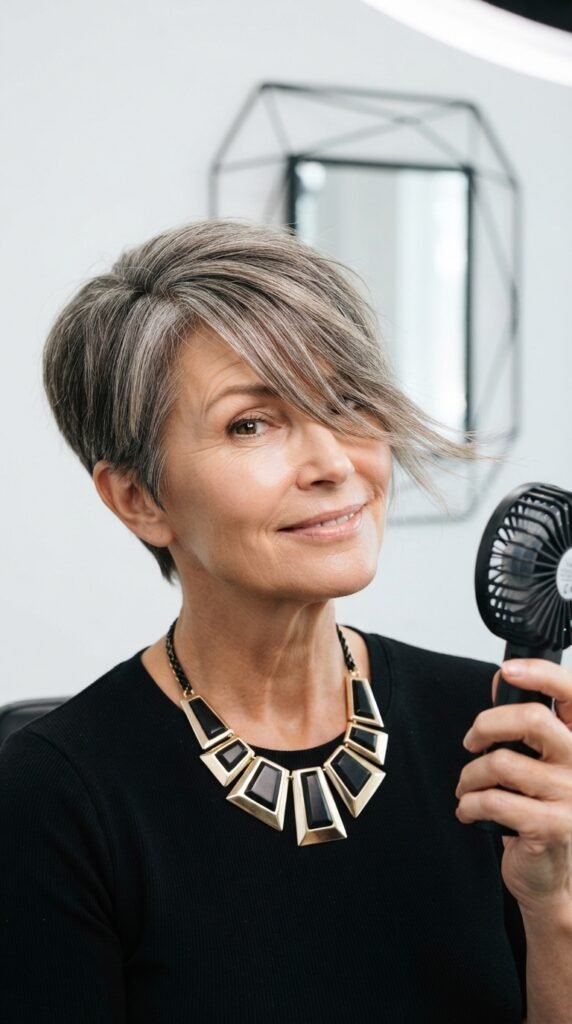
Why it works: Keeping extra length on top while the sides stay short gives you room to create height and texture with fingers alone, which is ideal for hair that has thinned but is still workable. The choppy finish also disguises any unevenness in regrowth.
Ask for: Ask for “a choppy pixie with the top left two to three inches longer than the sides.”
9. Soft Layered Crop with Curtain Fringe
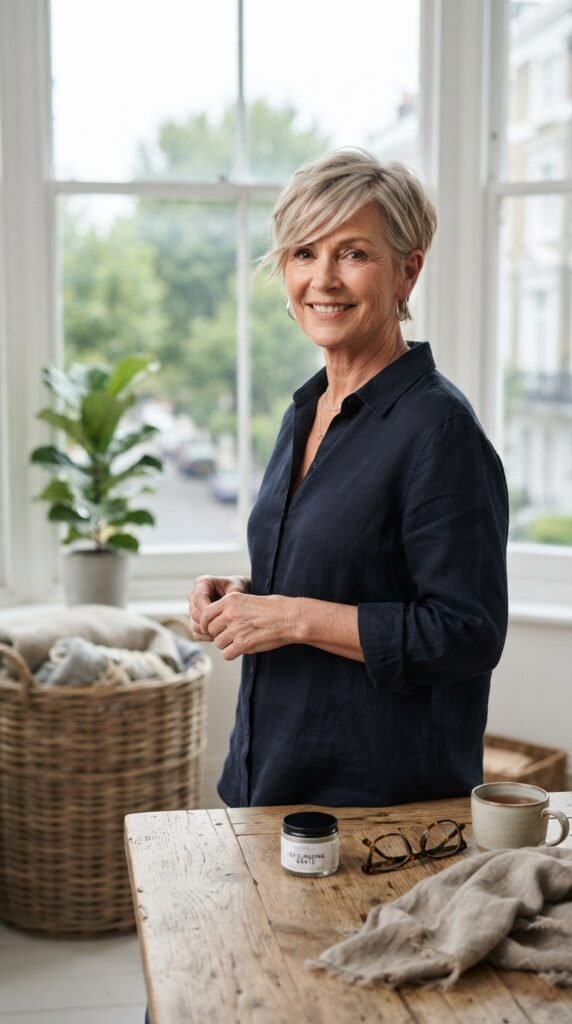
Why it works: A curtain fringe parts naturally down the middle and softens the whole face without the heaviness of a full fringe, which suits fine or thinning hair especially well. The soft layers beneath it keep the cut from looking blunt or dated.
Ask for: Ask for “a soft layered crop with a curtain fringe left long enough to part on its own.”
10. Voluminous Pixie with Textured Crown
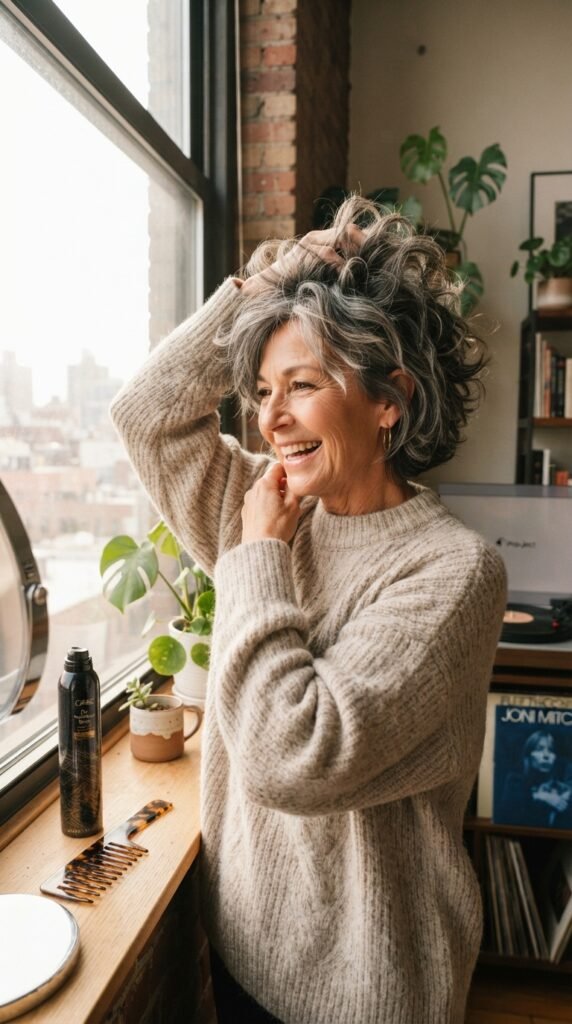
Why it works: A light backcombing technique at the crown builds height that lasts far longer than a blow-dry alone, which matters most for hair that has thinned with age. The pixie’s short length elsewhere keeps the overall look proportional rather than top-heavy.
Ask for: Ask for “a light backcomb at the crown, smoothed over, finished with a flexible-hold spray.”
11. Short Layered Bob (Chin-Grazing)
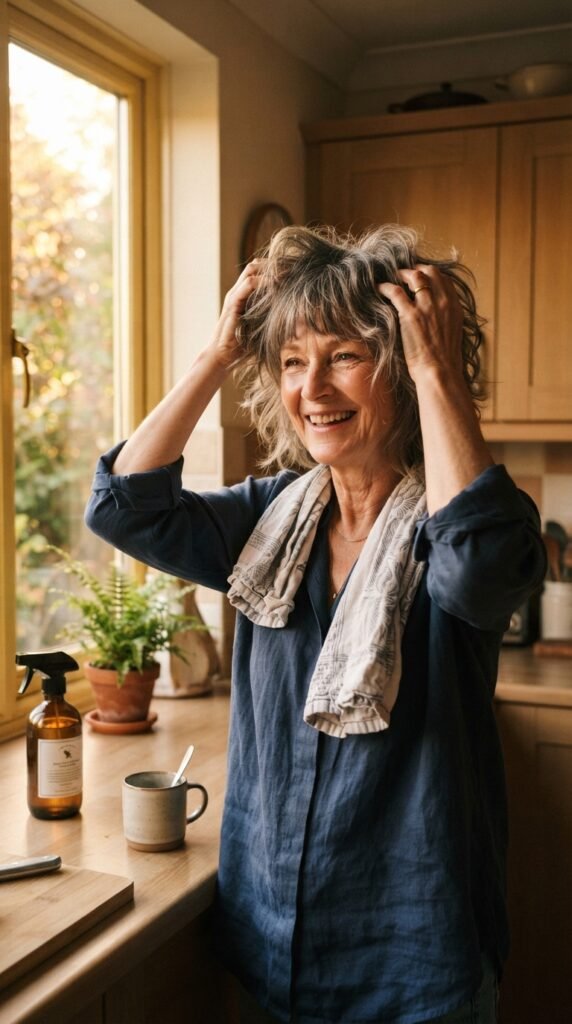
Why it works: Cutting the bob to sit right at the chin keeps the length short enough to layer heavily for volume, while still framing the jawline in a flattering way. It’s a versatile length that reads as polished for both casual and dressier days.
Ask for: Ask for “a chin-length bob with heavy internal layers for movement.”
12. Graduated Pixie with Side-Swept Bangs

Why it works: The graduated shape builds volume gradually from the nape upward, which is especially forgiving for hair that has thinned unevenly with age. Side-swept bangs keep the front soft rather than boxy, avoiding a dated look.
Ask for: Ask for “a graduated pixie, shorter at the nape, with bangs swept and blended to the side.”
13. Curly Short Layers, Natural Texture
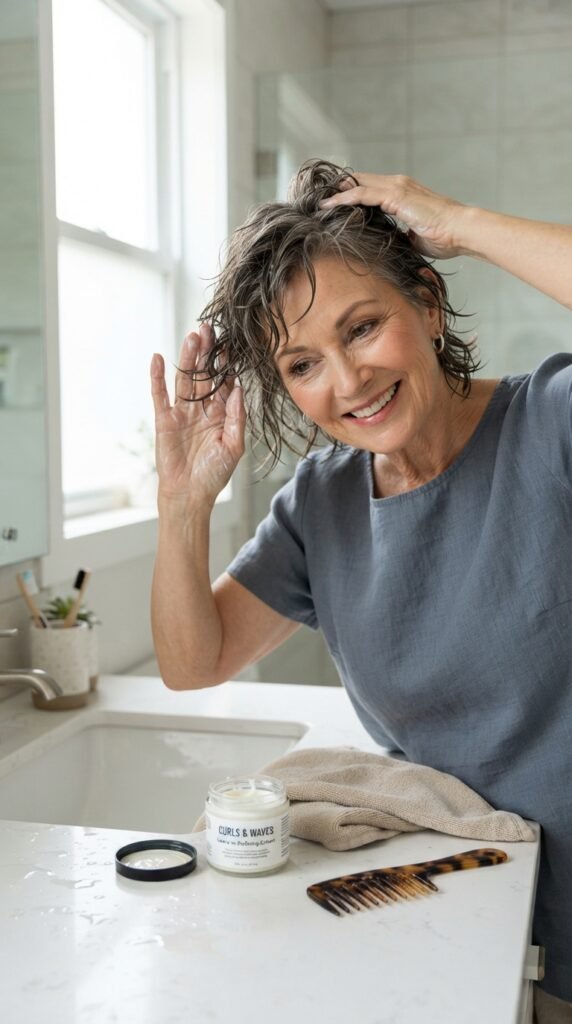
Why it works: Short layers give natural curls room to spring rather than clump into a heavy, shapeless mass, which is common when curly hair thins with age. Letting the natural texture lead the cut also cuts down on daily styling time significantly.
Ask for: Ask for “a dry cut that follows your natural curl pattern, layered for bounce.”
14. Sleek Cropped Layers, Side Part
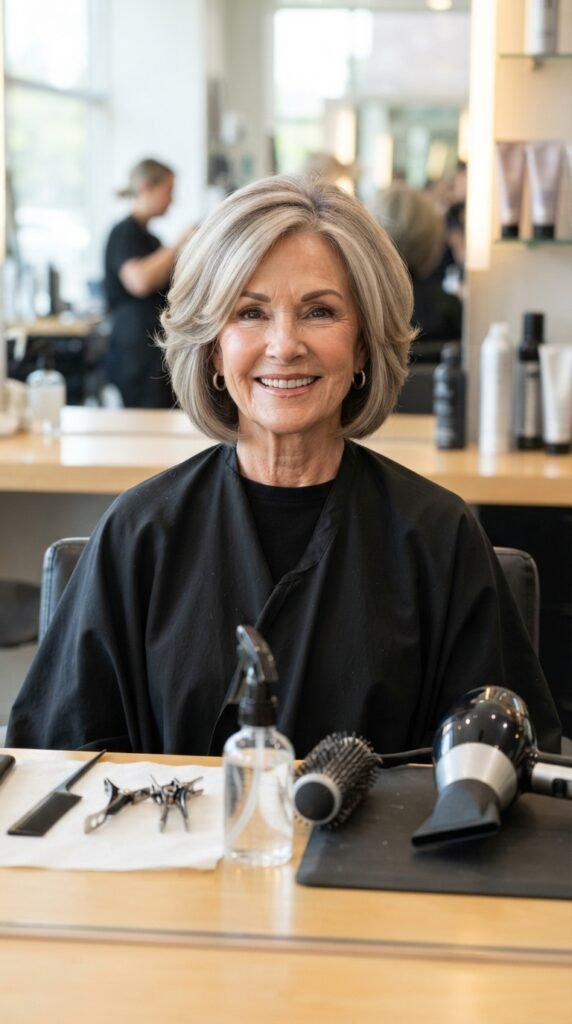
Why it works: A sleek, glass-like finish reflects light along each layer, which visually thickens finer strands more than a matte finish would. The deep side part adds a modern asymmetry that keeps the cut from feeling severe.
Ask for: Ask for “a sleek cropped cut flat-ironed smooth, with a deep side part.”
15. Asymmetrical Pixie with Long Fringe
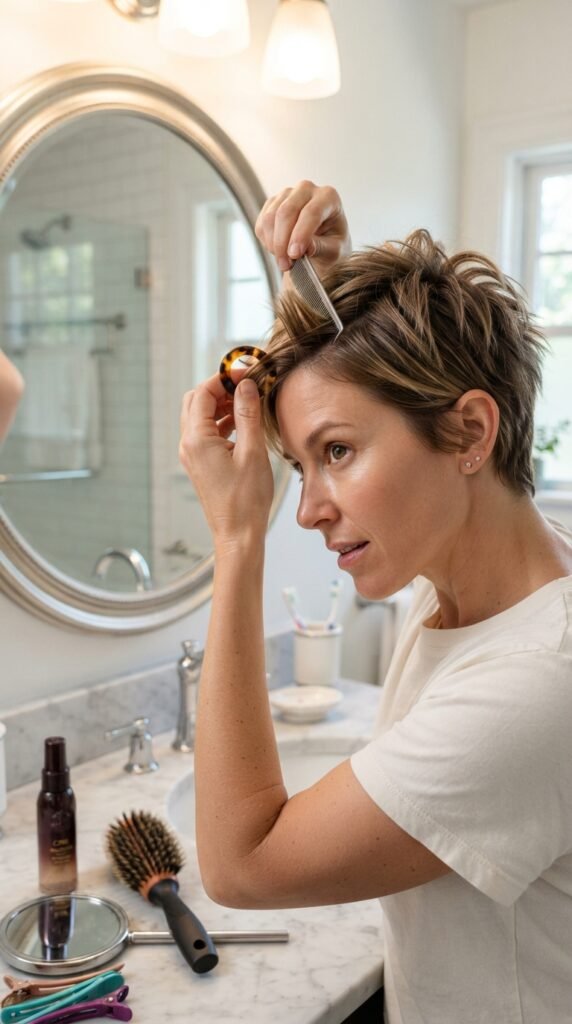
Why it works: The asymmetry creates a striking line that draws the eye away from thinner areas at the temples, while the long fringe softens the boldness so it still reads as elegant. It’s a confident choice for anyone ready for a style refresh.
Ask for: Ask for “an asymmetrical pixie, longer on one side, with a long fringe left to sweep.”
16. Short Shag with Wispy Bangs
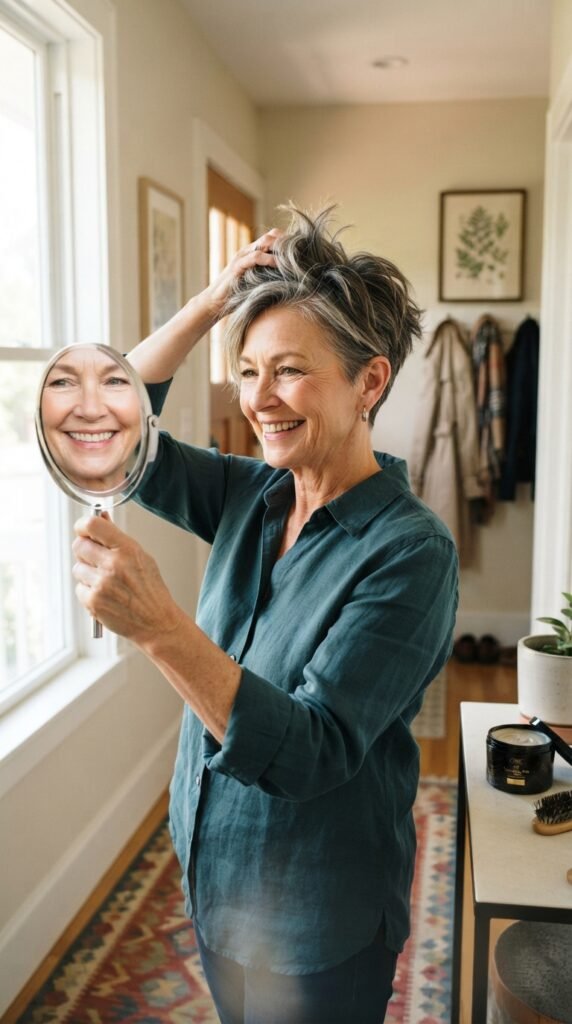
Why it works: The disconnected layers of a short shag add texture and perceived thickness throughout, while wispy bangs let a little scalp show through on purpose so the fringe never looks like a heavy, flat curtain. Together they feel relaxed rather than overly styled.
Ask for: Ask for “a short shag with wispy, point-cut bangs left loose, not blow-dried flat.”
17. Layered Crop with Face-Framing Pieces
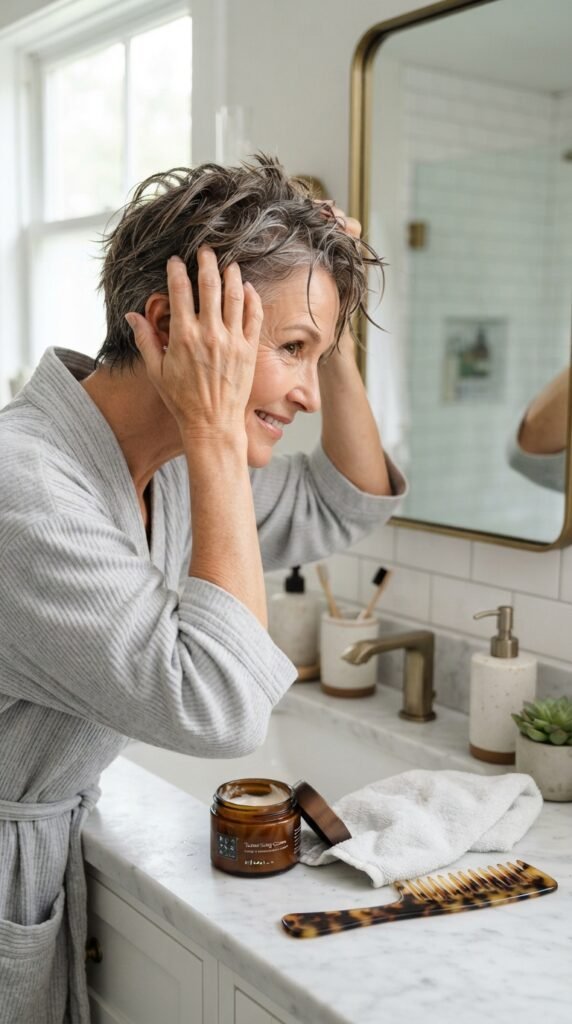
Why it works: Longer face-framing pieces left around the cheekbones draw attention toward the eyes and away from any thinning at the temples, all without needing precise daily styling. The rest of the crop stays short and easy to manage.
Ask for: Ask for “a layered crop with longer face-framing pieces left at the cheeks.”
18. Textured Pixie with Micro-Bangs
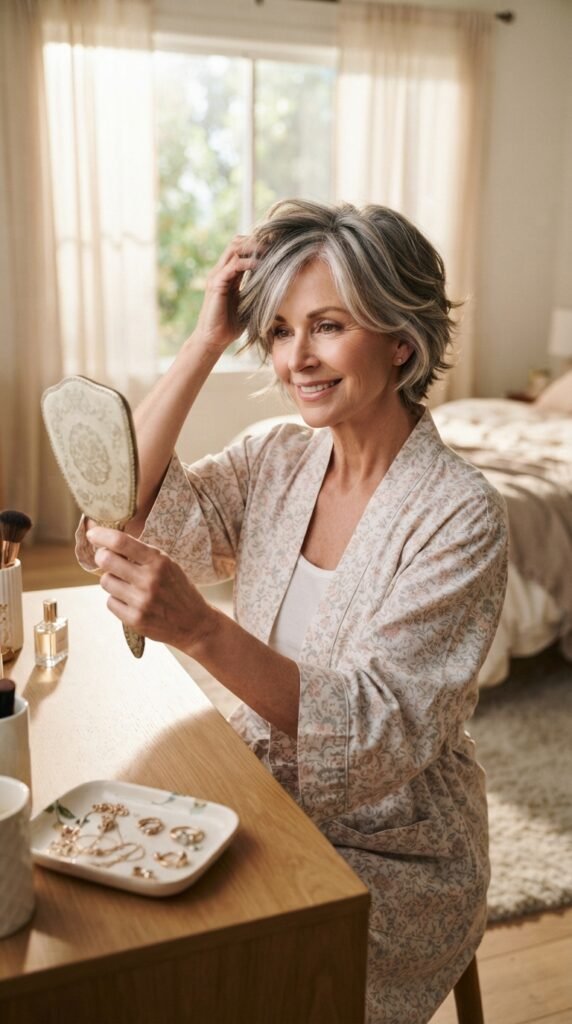
Why it works: Piecey texture throughout the pixie creates separation that reads as fuller than a smooth, uniform cut, and the short, graphic micro-bangs add a bold, youthful accent. It’s a striking option for someone ready to make a statement.
Ask for: Ask for “point-cut piecey layers with short, blunt micro-bangs above the brow.”
19. Short Layers with Soft Waves
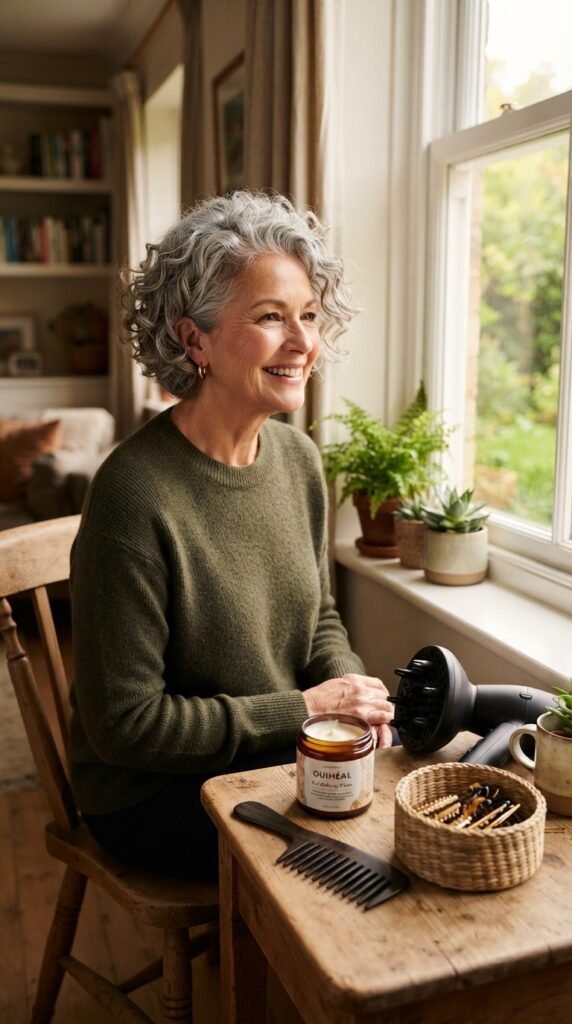
Why it works: Soft, loose waves add gentle movement to short layers without demanding a lot of daily heat styling, which helps protect hair that’s naturally more fragile with age. The waves also disguise the flat spots that come with finer, drier strands.
Ask for: Ask for “soft waves set on a small curling wand, brushed out for a loose finish.”
20. Cropped Pixie with Feathered Nape

Why it works: Feathering rather than blunt-cutting the nape keeps the back of the head from looking bulky or heavy as hair thins with age, giving a soft, delicate edge instead. It’s a neat, low-fuss finish that pairs well with any longer top section.
Ask for: Ask for “a feathered, scissor-over-comb finish at the nape rather than a blunt clipper line.”
21. Piecey Pixie with High Volume Crown
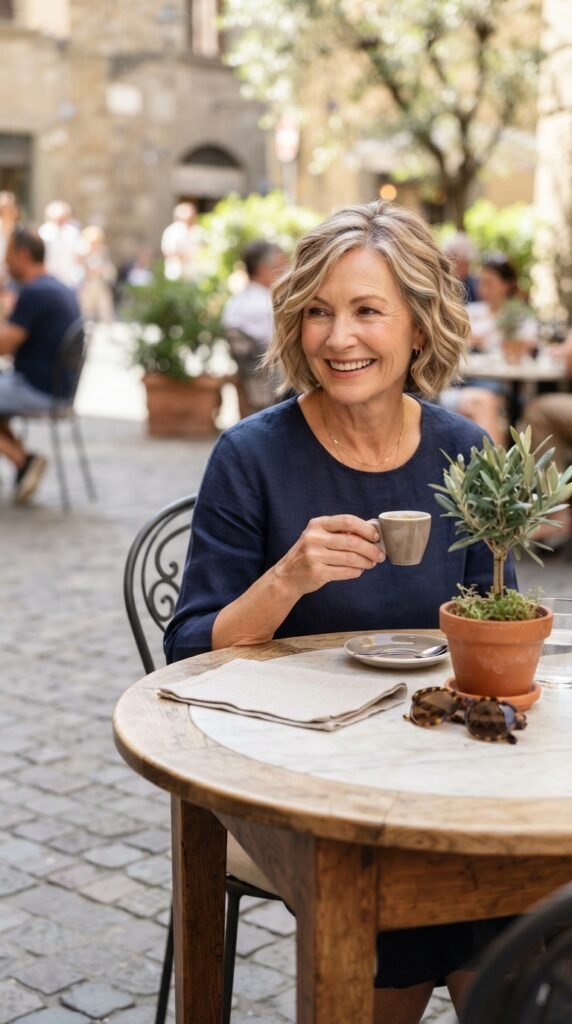
Why it works: Building height at the root first gives fine, thinning hair a base of volume that styling alone can’t create, and the piecey layers throughout keep that lift from looking stiff. Together they solve flatness at the root and shapelessness at the ends.
Ask for: Ask for “root-lift sections with a paddle brush, textured with a light styling paste.”
22. Short Layered Cut with Undercut Nape
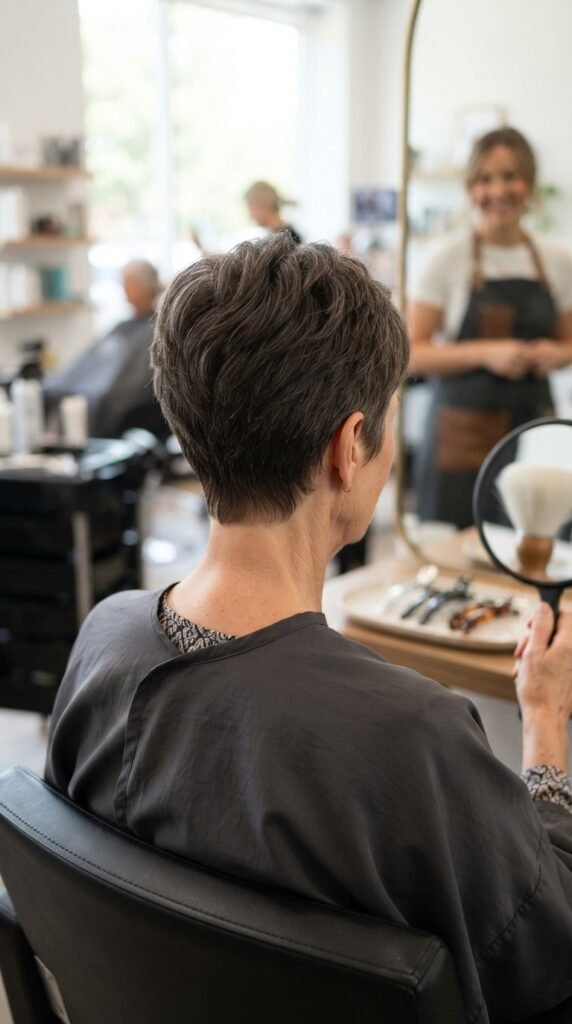
Why it works: A subtle undercut at the nape removes bulk that can make hair look thin and stringy at the ends, letting the top layers sit lighter and bouncier instead. It’s a modern touch that stays hidden under the top layer for everyday wear.
Ask for: Ask for “a subtle undercut at the nape to remove bulk beneath the top layer.”
23. Tousled Pixie for Fine Hair
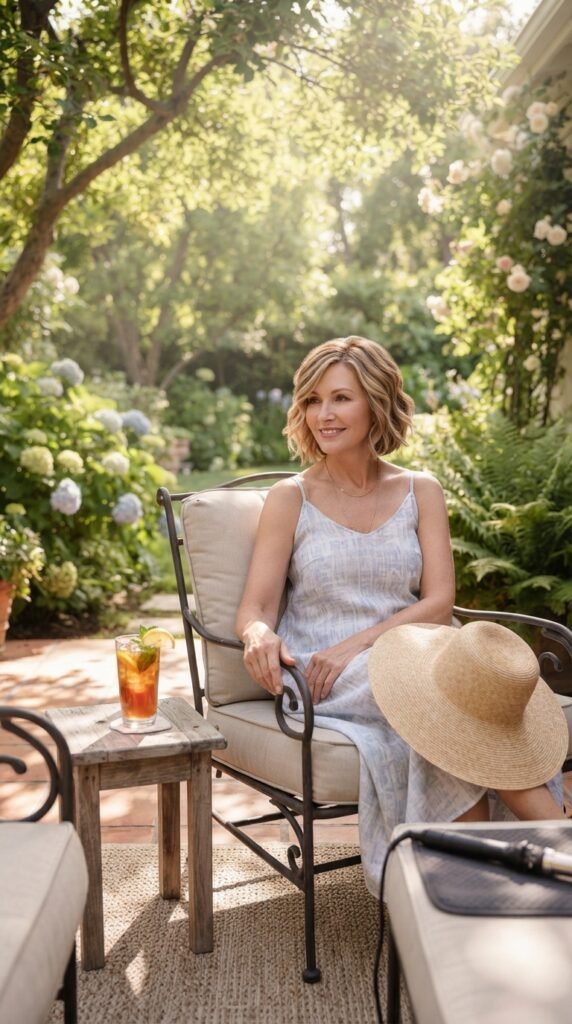
Why it works: Layers cut specifically to be tousled and finger-styled mean fine hair doesn’t need a precise blow-dry every day to look shaped, which saves both time and heat damage. A lightweight cream is enough to define texture without weighing hair down.
Ask for: Ask for “layers cut to be scrunched with a lightweight cream, not blow-dried smooth.”
24. Short Layers with Side-Swept Fringe
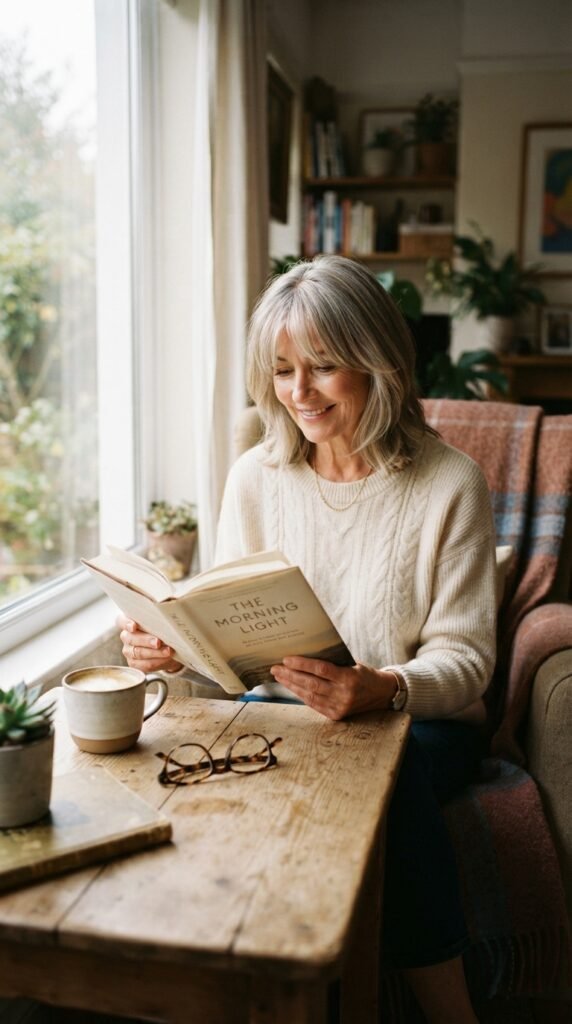
Why it works: A side-swept fringe blends into the surrounding layers without a harsh line, which flatters a rounder or fuller face while avoiding any dated, boxy shape. It grows out gracefully, so it stays wearable between salon visits.
Ask for: Ask for “a side-swept fringe blended into the layers, not cut with a hard line.”
25. Rounded Crop with Soft Layers
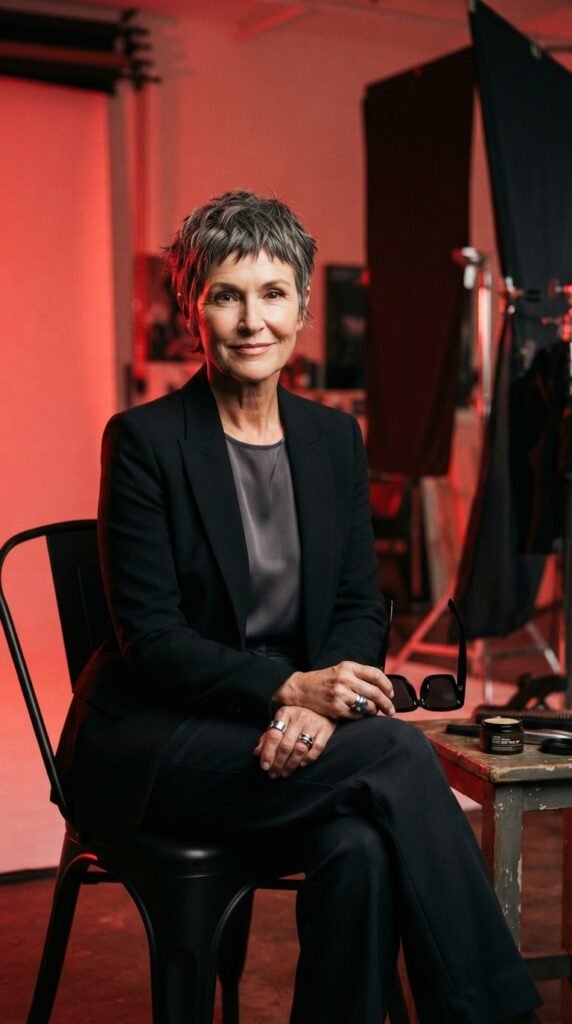
Why it works: The rounded shape of this crop mirrors the natural curve of the face, which is universally flattering at any age, and soft layers keep the edges from looking severe against mature skin. It’s a timeless, easy-to-maintain classic.
Ask for: Ask for “a rounded crop with soft, blended layers rather than a hard outline.”
26. Textured Shag Pixie
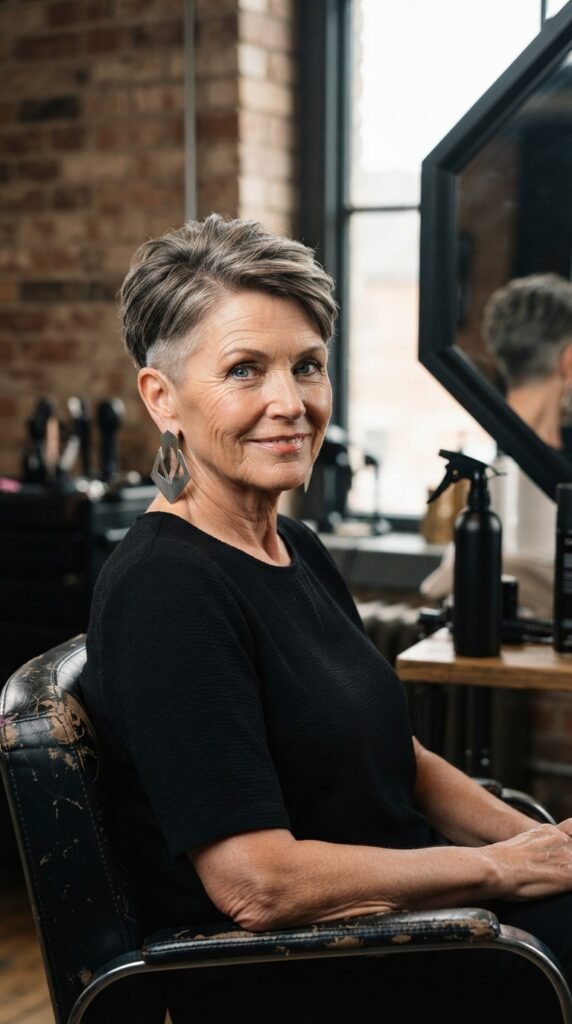
Why it works: Combining shag texture with a pixie’s short length gives heavily thinned hair maximum surface movement in every direction, making it look denser than a smoother short cut would. It also hides regrowth lines exceptionally well between trims.
Ask for: Ask for “a pixie cut with shag-style heavy layering and texturized ends.”
27. Short Layered Cut with Blunt Fringe
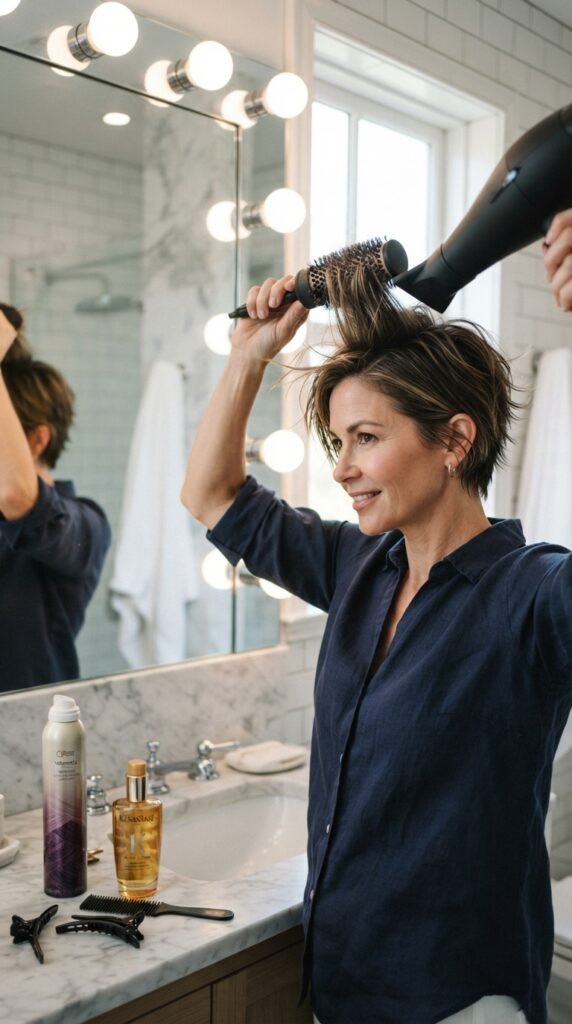
Why it works: A blunt fringe adds a strong, graphic line that reads as confident and current, while the layers throughout the rest of the cut keep the overall look from feeling heavy. It’s a bold pairing for anyone ready to stand out.
Ask for: Ask for “a straight-across blunt fringe paired with layered length behind it.”
28. Silver Pixie with Soft Feathering
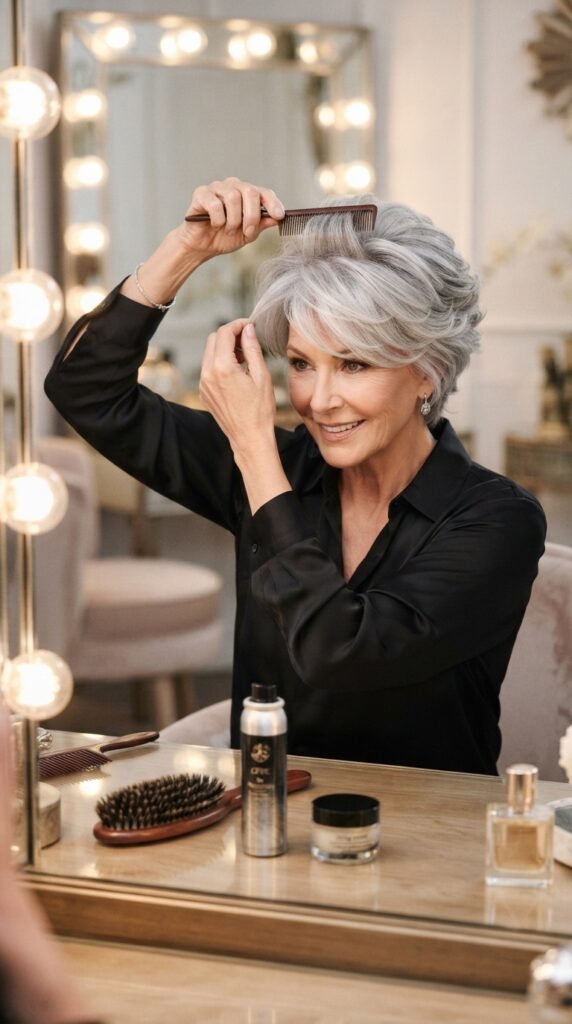
Why it works: Soft feathering keeps the ends of a pixie from looking blunt or harsh against silver or gray tones, which can otherwise emphasize any sparseness. The gentle taper flatters mature skin and lets the natural hair color take center stage.
Ask for: Ask for “soft feathering at the ends with a razor, avoiding any blunt lines.”
29. Wash-and-Go Short Layers
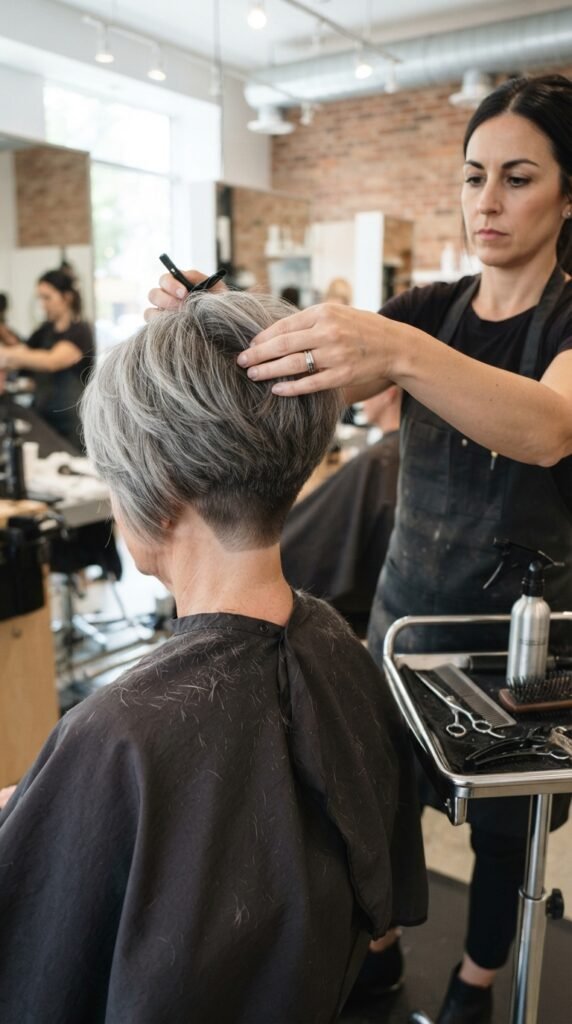
Why it works: Layers cut specifically to fall well when air-dried mean you don’t need a daily blow-dry to look put-together, which matters most when hair is drier and more fragile with age. It’s the easiest option on this list for busy or low-energy mornings.
Ask for: Ask for “layers cut to air-dry with texture, using just a lightweight leave-in cream.”
Frequently Asked Questions
What’s the best short layered hairstyle for thinning hair over 60? Styles like the Layered Crop with Root Volume, the Voluminous Pixie with Textured Crown, and the Short Layered Cut with Undercut Nape are especially good picks, since each is built specifically to add lift and remove bulk without looking flat.
How to make thinning hair look fuller for everyday wear? Blow-dry your roots upward at the crown with a round brush before letting the rest air-dry, apply a lightweight volumizing product to damp roots rather than the mid-lengths, and keep the sides slightly shorter than the top so the crown reads as fuller by comparison.
Are pixie cuts good for thinning hair? Yes, in most cases — a well-layered pixie removes weight that drags fine hair flat and lets the remaining hair stand up for more apparent volume, though very fine hair may need extra root-lift styling since a pixie leaves little length to disguise sparse patches.
Wrap-Up
Whatever version you choose, the goal is the same: use short layers to build shape where volume is needed most, keep the fringe soft so it frames rather than flattens, and let the cut do the work so daily styling stays simple. From here, it’s just about picking the length and texture that feel most like you, and that suit how you actually want to spend your mornings.