
If your hair tends to go flat by lunchtime no matter how much you teased your roots that morning, you already know the struggle. Thin, fine strands can feel weightless in the best way and limp in the worst way — and finding a cut that actually holds shape, texture, and body all day can feel like a moving target.
The good news is you don’t need a dramatic chop or a totally new hair type to get there. Small shifts in length, layering, and finish can make a real difference in how full and intentional your hair looks. Below are 30 short hairstyles built specifically with thin, fine hair in mind, so you can pick the one that fits your day-to-day life and however you like to wear your hair out.
1. Textured Bob
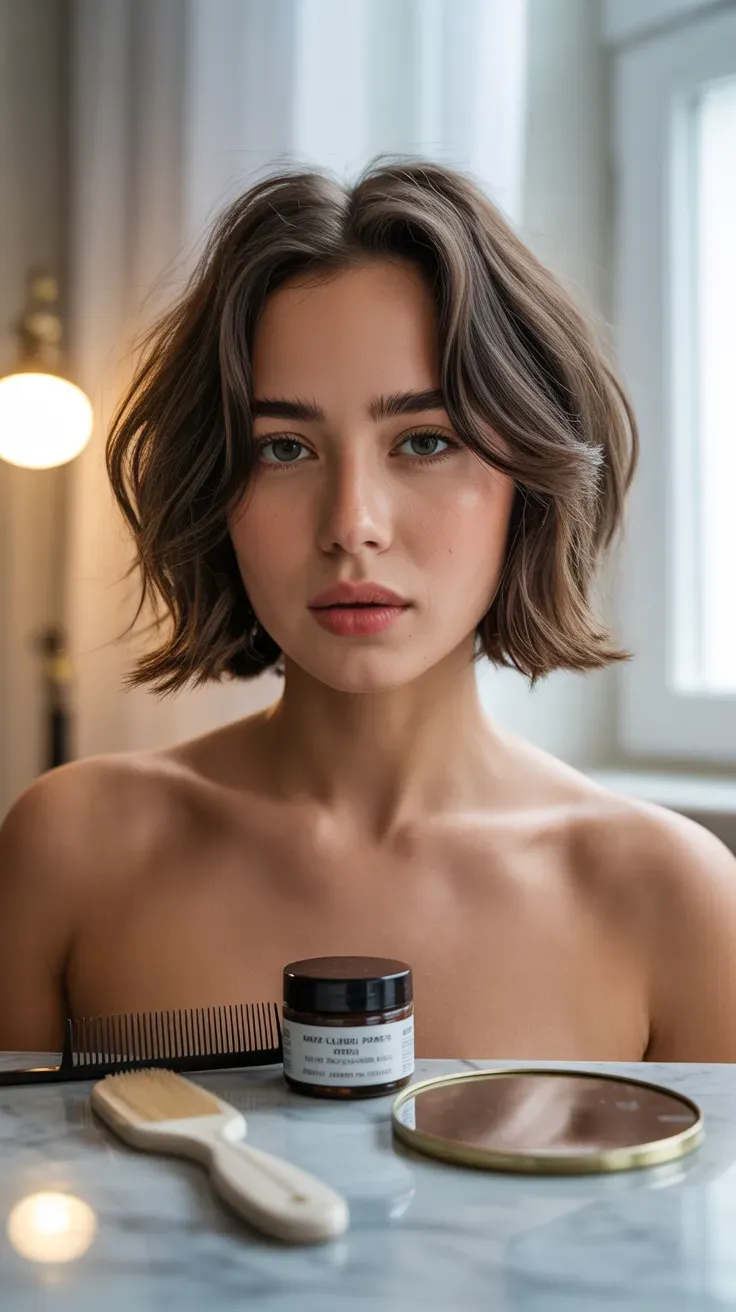
Why it works: Texturized ends break up the blunt edge that can make fine hair look stringy, creating the illusion of movement and thickness without adding actual length. The choppy layering catches light unevenly, which reads as fuller than a flat, single-length cut.
Ask for: Ask your stylist for a “point-cut bob with texturizing shears through the ends only.”
2. Blunt Bob with Fringe
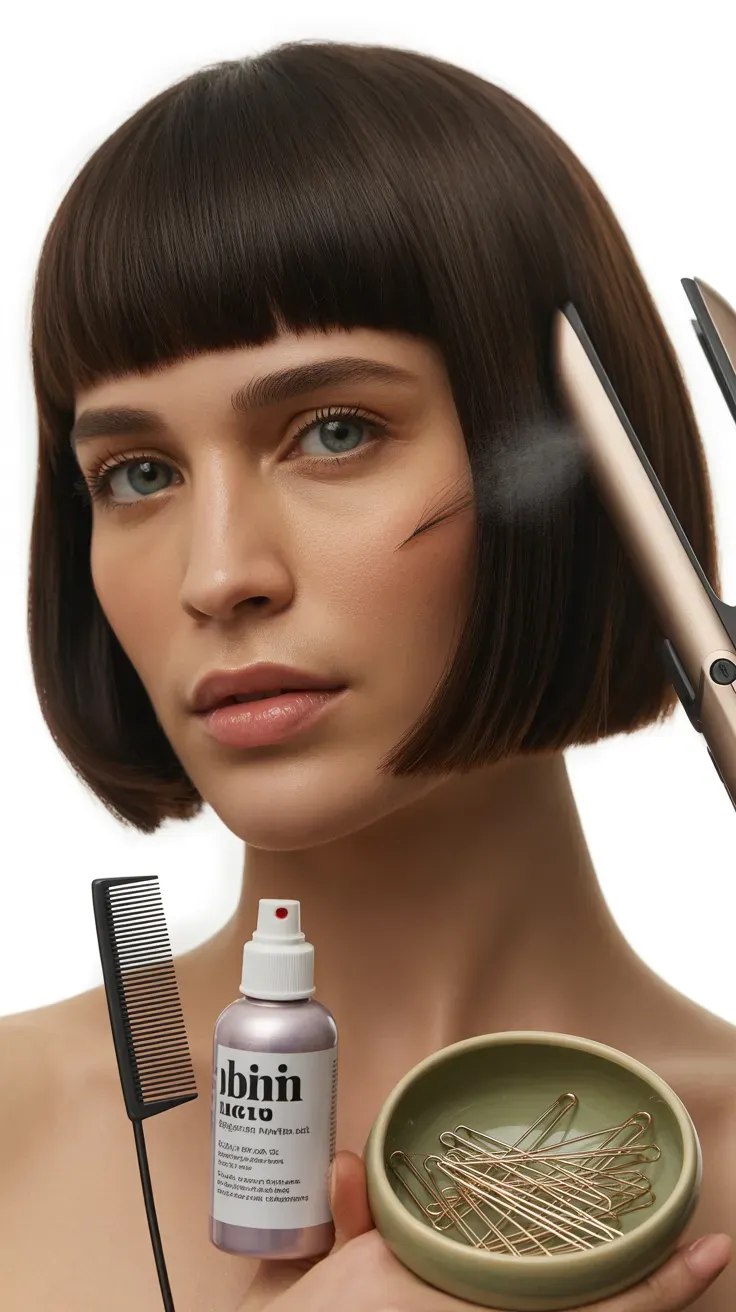
Why it works: A one-length blunt edge relies on density rather than layers, so every strand of fine hair stacks together at the bottom, creating the visual weight and thickness thin hair usually lacks. The fringe adds a focal point that draws the eye away from sparse crown volume.
Ask for: Request a “one-length blunt bob with a heavy, eyebrow-skimming fringe” and no internal layering.
3. Pixie Cut with Long Layers
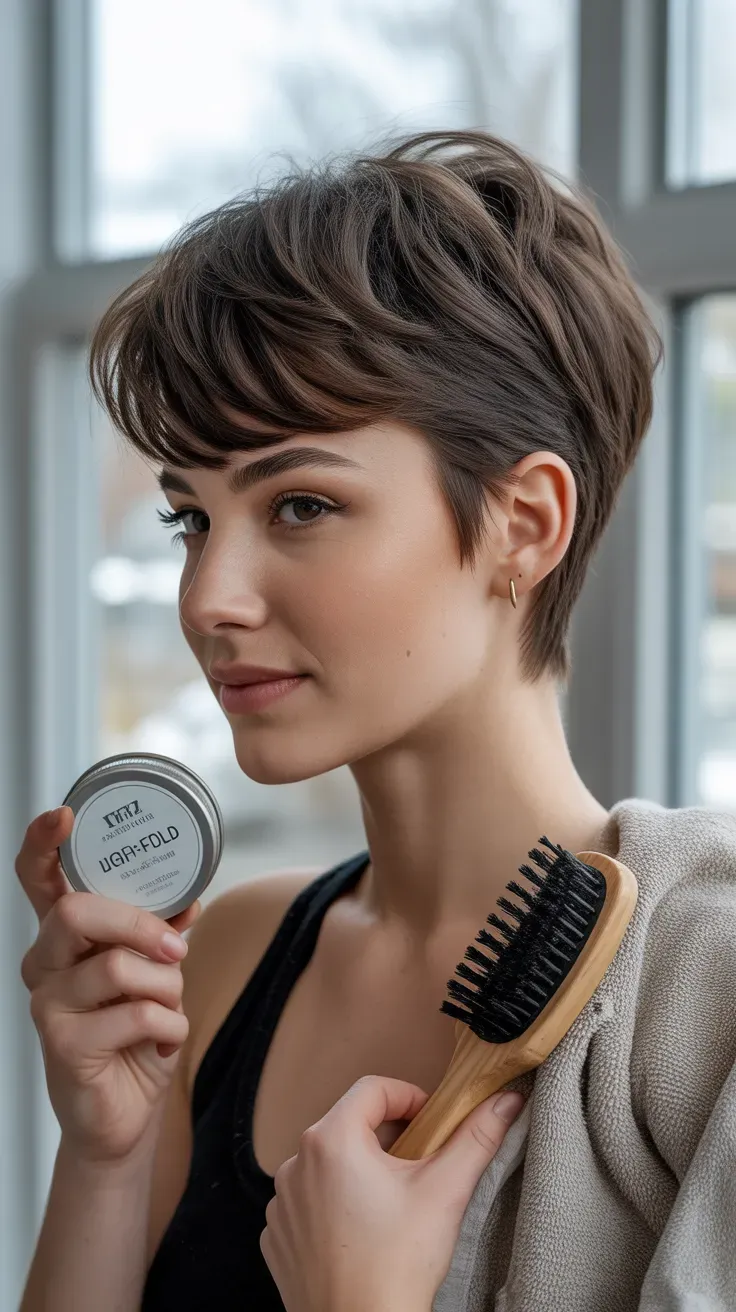
Why it works: Leaving extra length on top gives fine hair something to lift and root-tease without exposing scalp, while the tapered sides keep the silhouette from looking bulky at the bottom. This balance is exactly what makes a pixie read as full rather than thin.
Ask for: Ask for “longer layers through the crown with a soft taper at the nape and sides.”
4. Classic Pixie
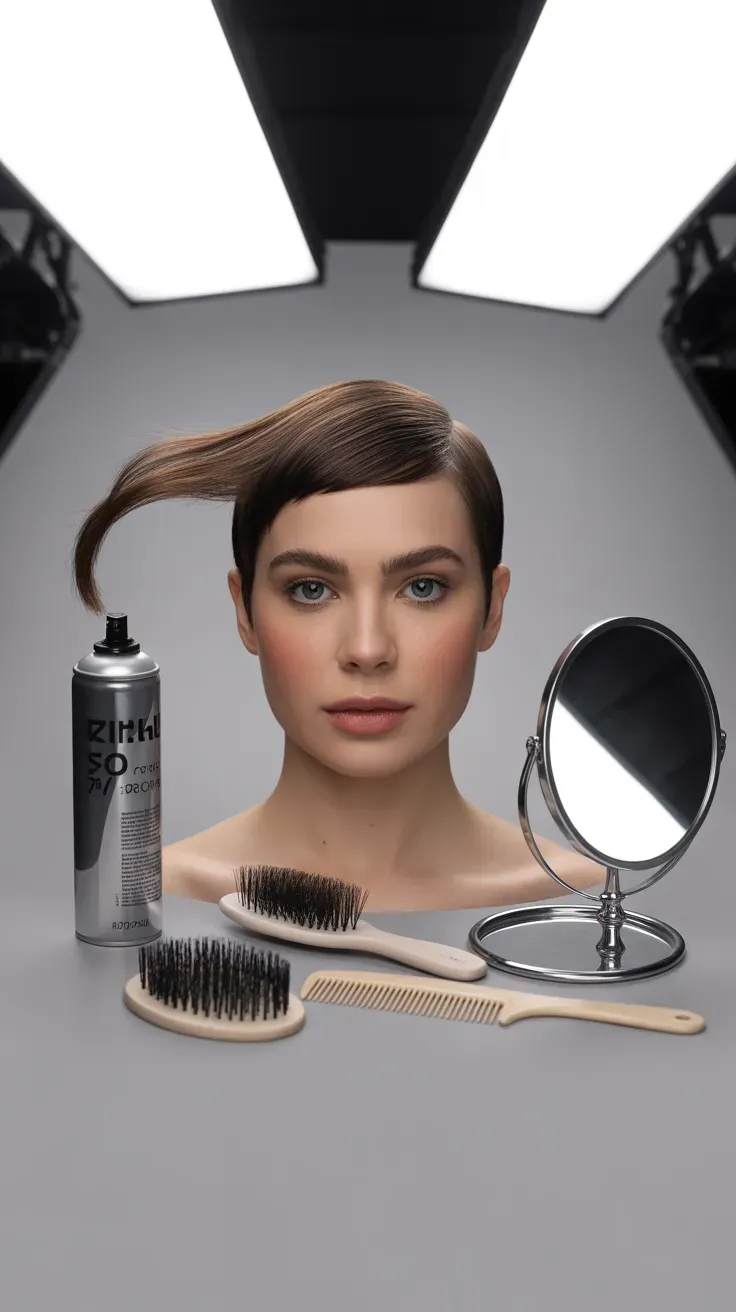
Why it works: Shorter hair is proportionally denser per strand since less weight pulls it down, which is why a close-cropped pixie can look surprisingly thick even on fine strands. The short length also means less friction and breakage over time.
Ask for: Tell your stylist you want “maximum density kept close to the head with minimal thinning shears.”
5. Shaggy Bob
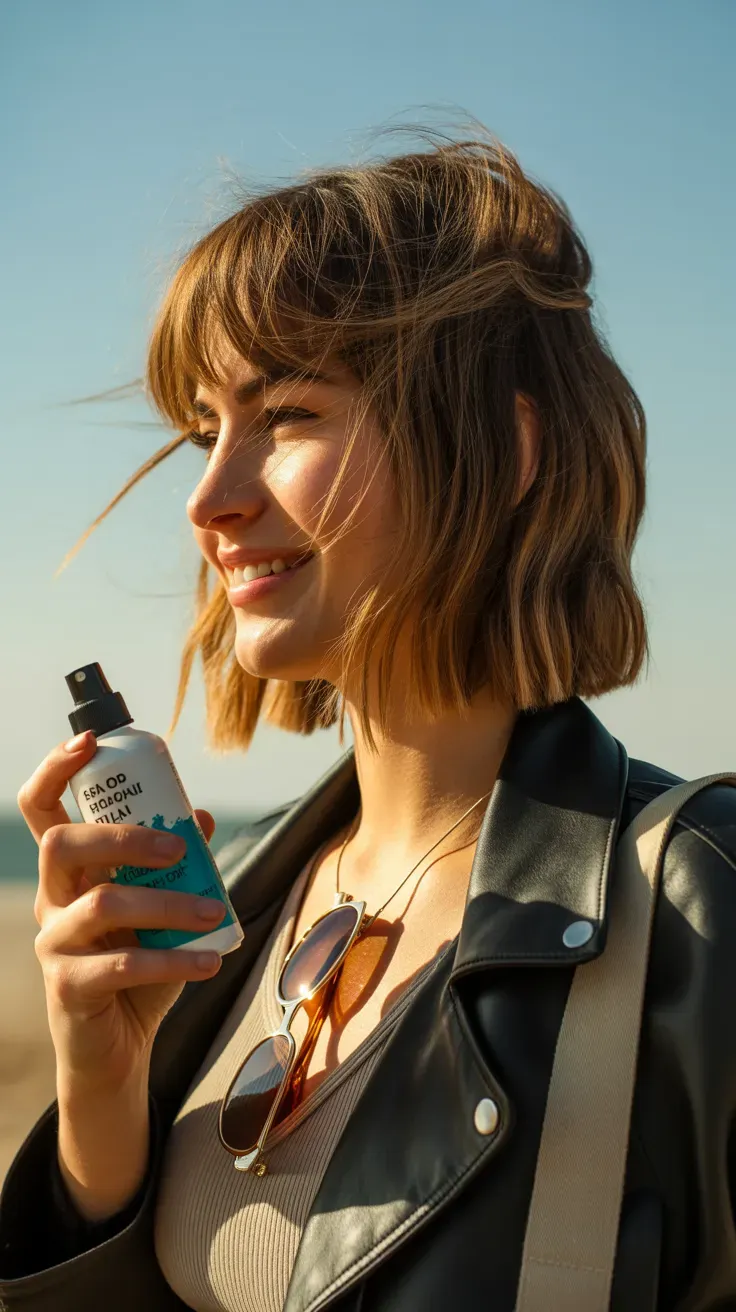
Why it works: The heavy layering throughout a shaggy bob distributes fine hair’s limited weight across multiple lengths instead of pooling it all at the bottom, which prevents the flat, stringy look thin hair often falls into. The choppy texture also hides thin ends naturally.
Ask for: Ask for a “shag bob with heavy face-framing layers cut with a razor for texture.”
6. Chin-Length Lob with Waves
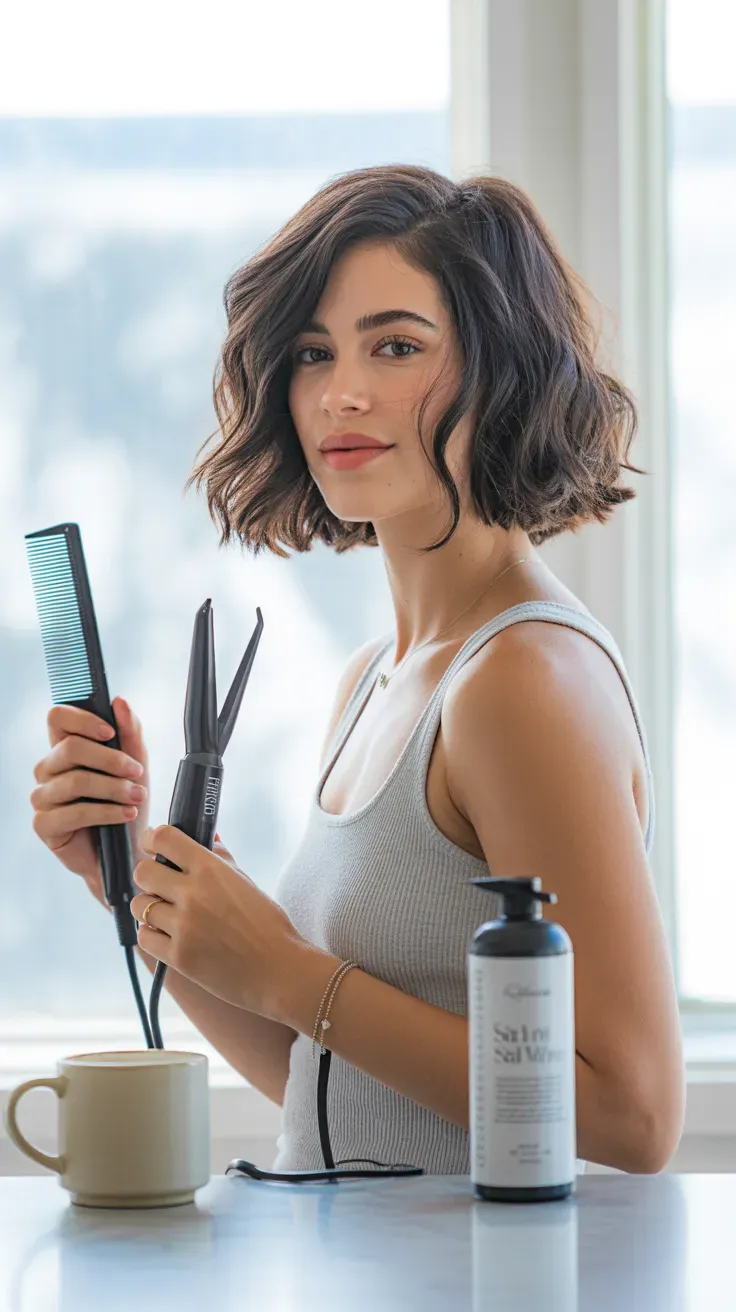
Why it works: Waves add dimension and visual bulk that straight fine hair can’t achieve on its own, tricking the eye into perceiving more density. The chin length keeps ends from getting so long that they thin out and lose shape by day’s end.
Ask for: Ask for a “1-inch curling wand wave set away from the face, alternating curl direction.”
7. Asymmetrical Bob
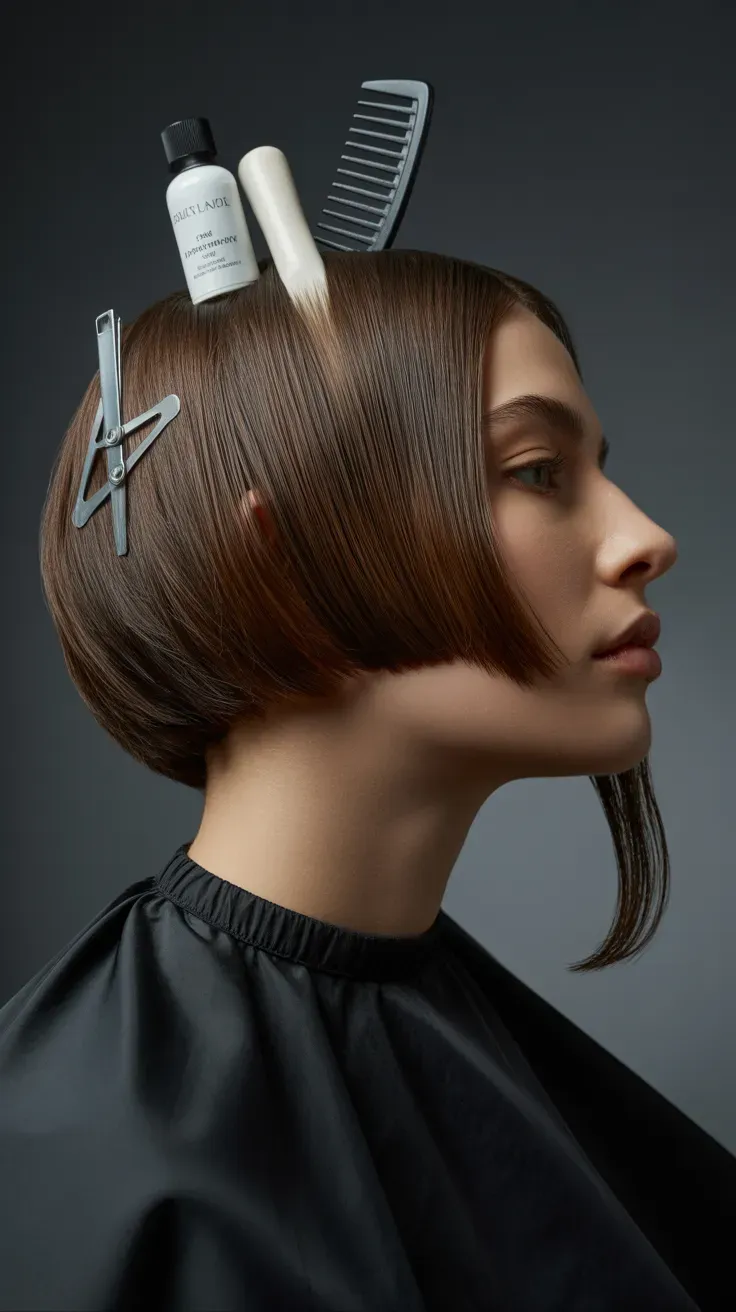
Why it works: The dramatic angle from short to long draws the eye diagonally across the face, creating a strong visual line that distracts from thin patches at the crown or temples. The graduated weight line also builds density toward the front.
Ask for: Ask for “a 2-to-3 inch drop from back to front, cut on a sharp diagonal.”
8. Side-Swept Pixie
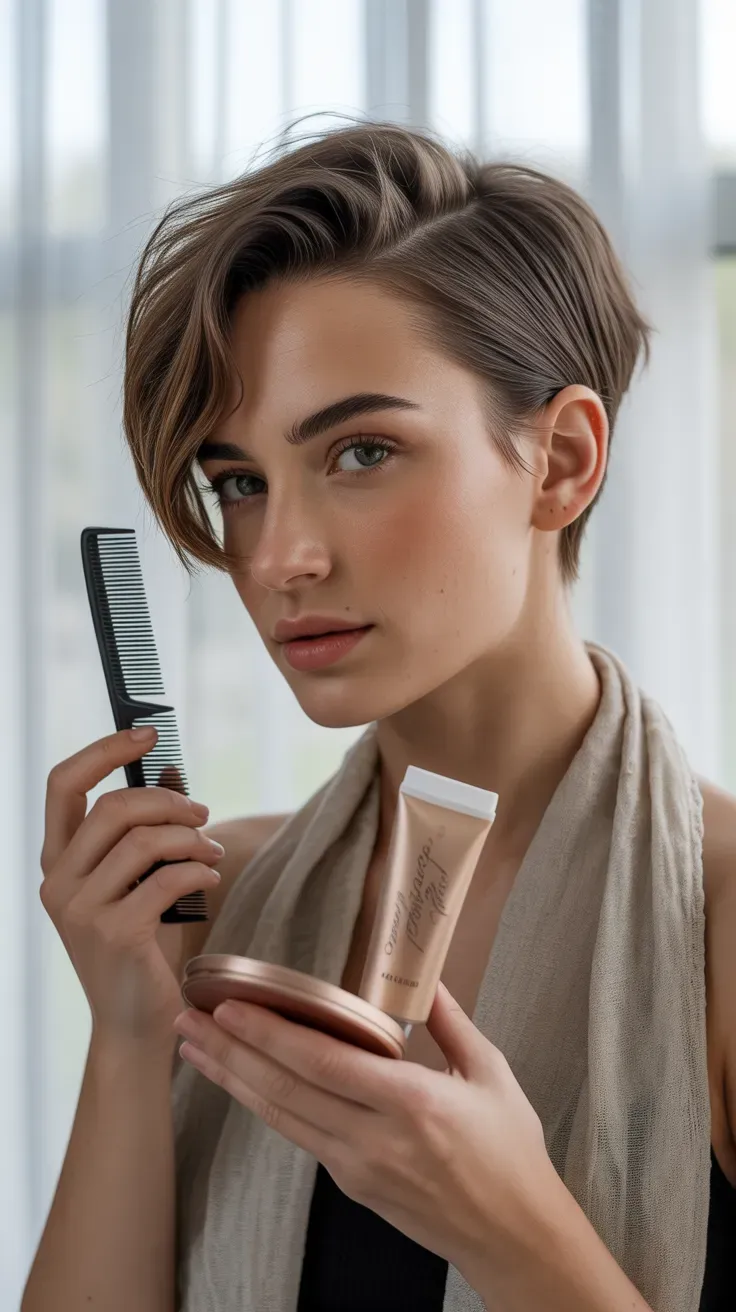
Why it works: A deep side part naturally lifts the roots on the heavier side, giving instant volume without any product, which is especially useful for fine hair that falls flat under a centered part. The sweep across the forehead also softens a thin hairline.
Ask for: Ask for the part to be cut in “on a deep diagonal, roughly a 70/30 split.”
9. French Bob
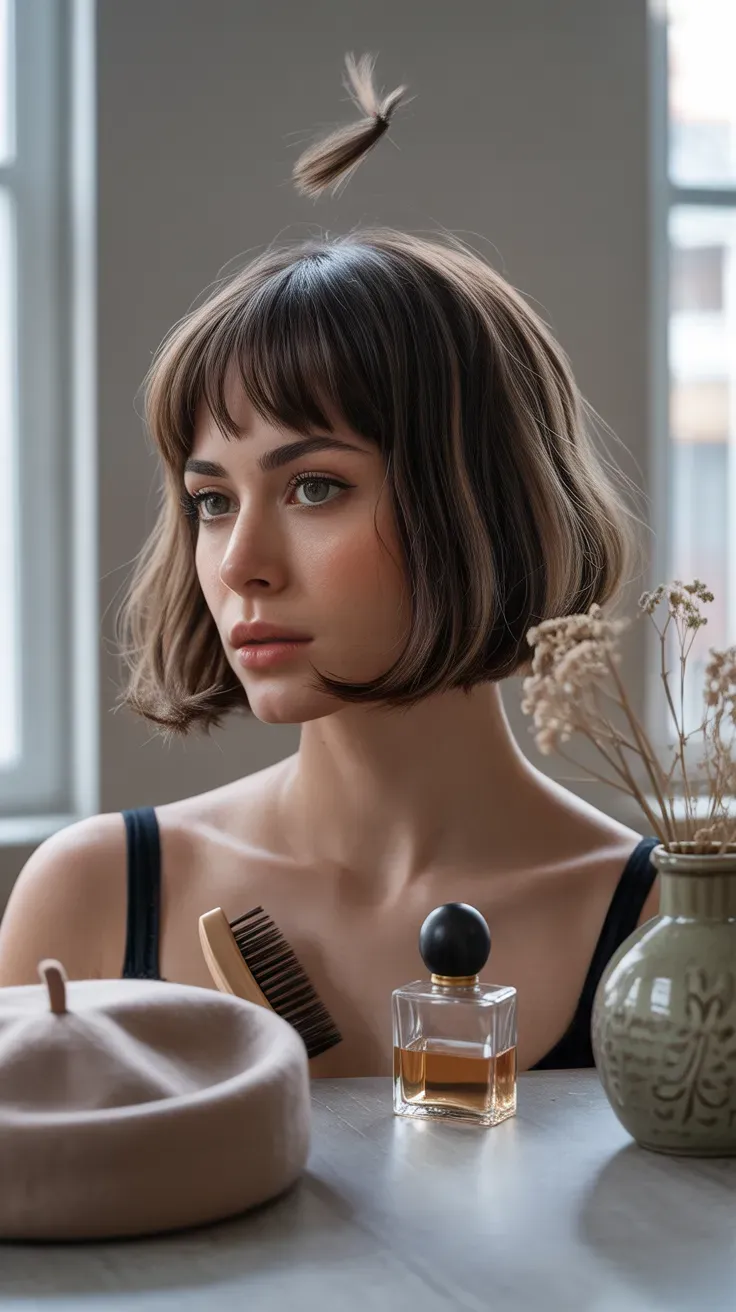
Why it works: The jaw-skimming length keeps hair short enough to avoid the weighed-down look of longer fine hair, while the curtain fringe adds face-framing dimension that reads as fuller than a plain forehead. This length also tends to flip out naturally, adding shape without heat tools.
Ask for: Ask for a “jaw-length bob with a soft curtain fringe parted down the middle.”
10. Layered Bob with Curtain Bangs
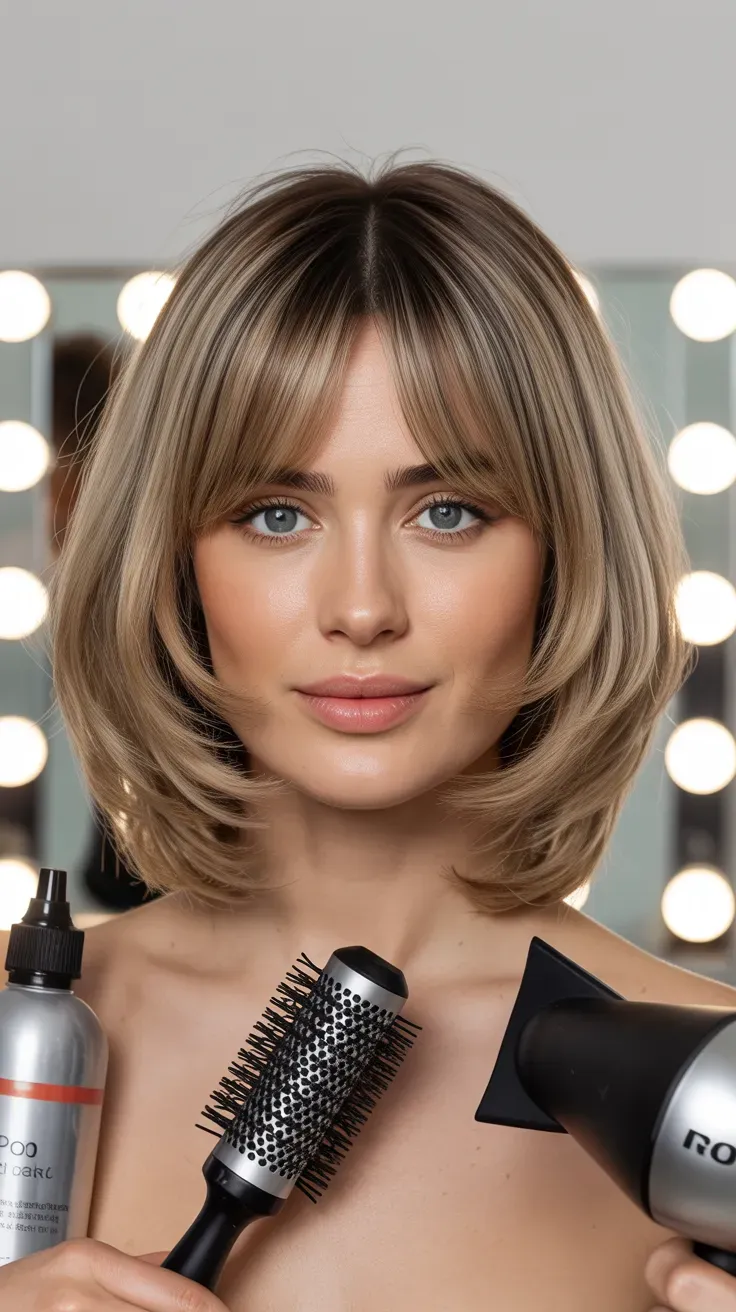
Why it works: Internal layers lighten the weight fine hair carries at the ends, letting it bounce and hold curl or blowout shape longer instead of dropping flat within hours. The curtain bangs add framing volume right where thinning is most visible.
Ask for: Ask for “internal layers starting at the cheekbone with curtain bangs blended into the sides.”
11. Textured Crop
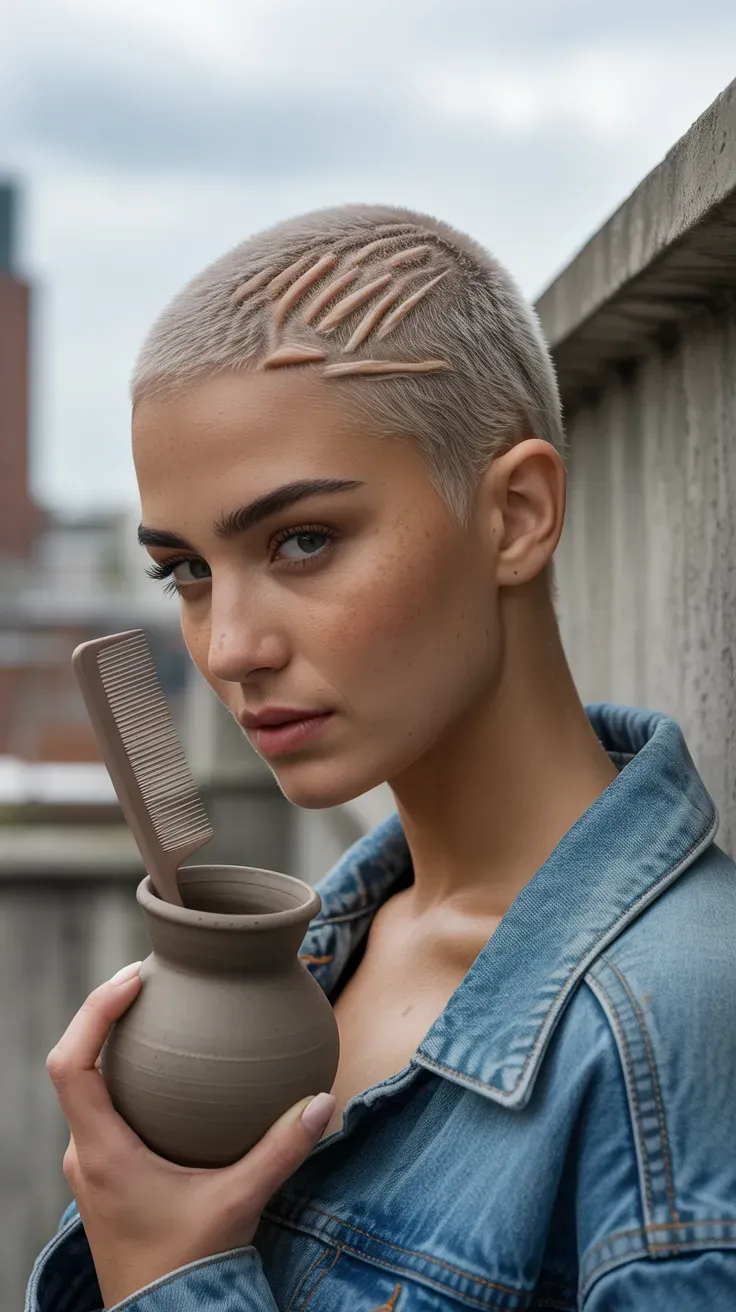
Why it works: A matte clay or paste finish adds grip and separation between fine strands, making each piece look thicker than it is instead of blending into a flat sheet. The short crop length also resists the weight that pulls thin hair down.
Ask for: Ask for it to be “cut short with a razor for texture, styled with a matte finishing paste.”
12. Short Wolf Cut
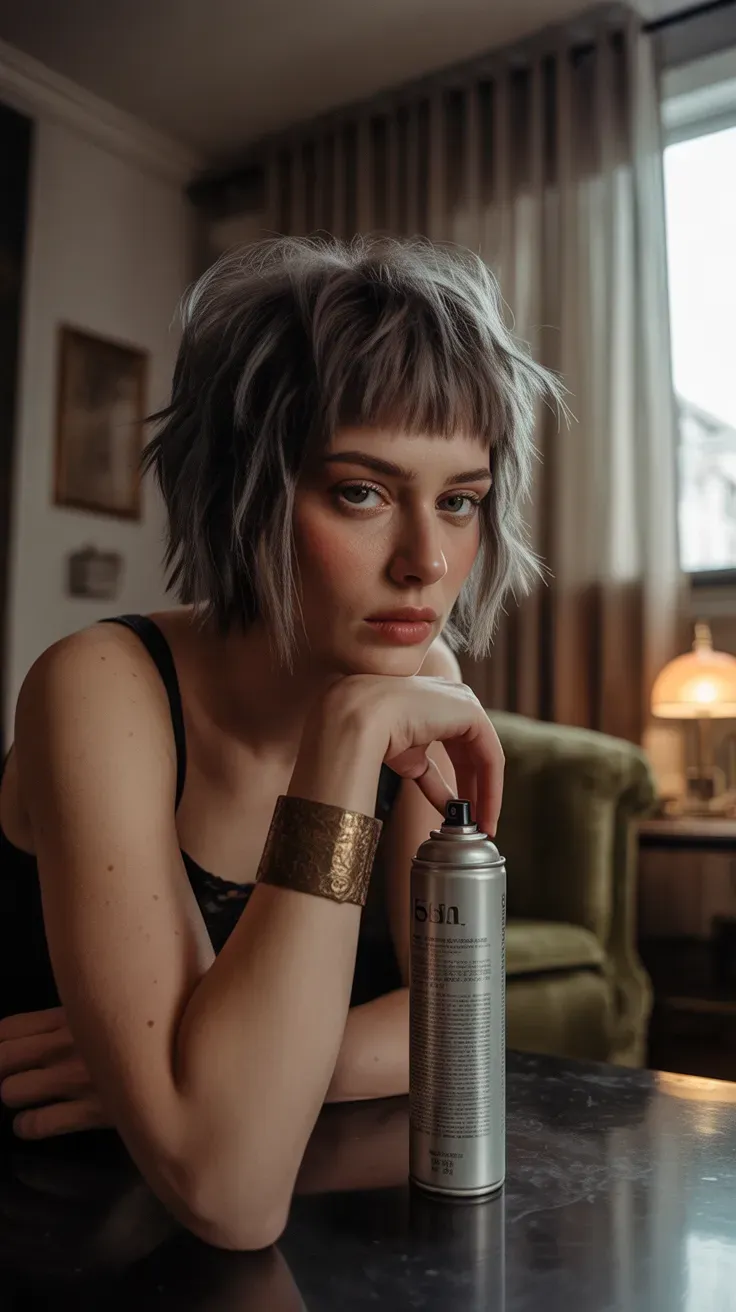
Why it works: The heavily stacked layers of a wolf cut create built-in volume at the crown, which is the exact spot fine hair tends to fall flattest. The shaggy, undone texture also camouflages any unevenness in strand thickness.
Ask for: Ask for “heavy disconnected layers with a choppy fringe, texturized with a razor.”
13. Stacked Bob
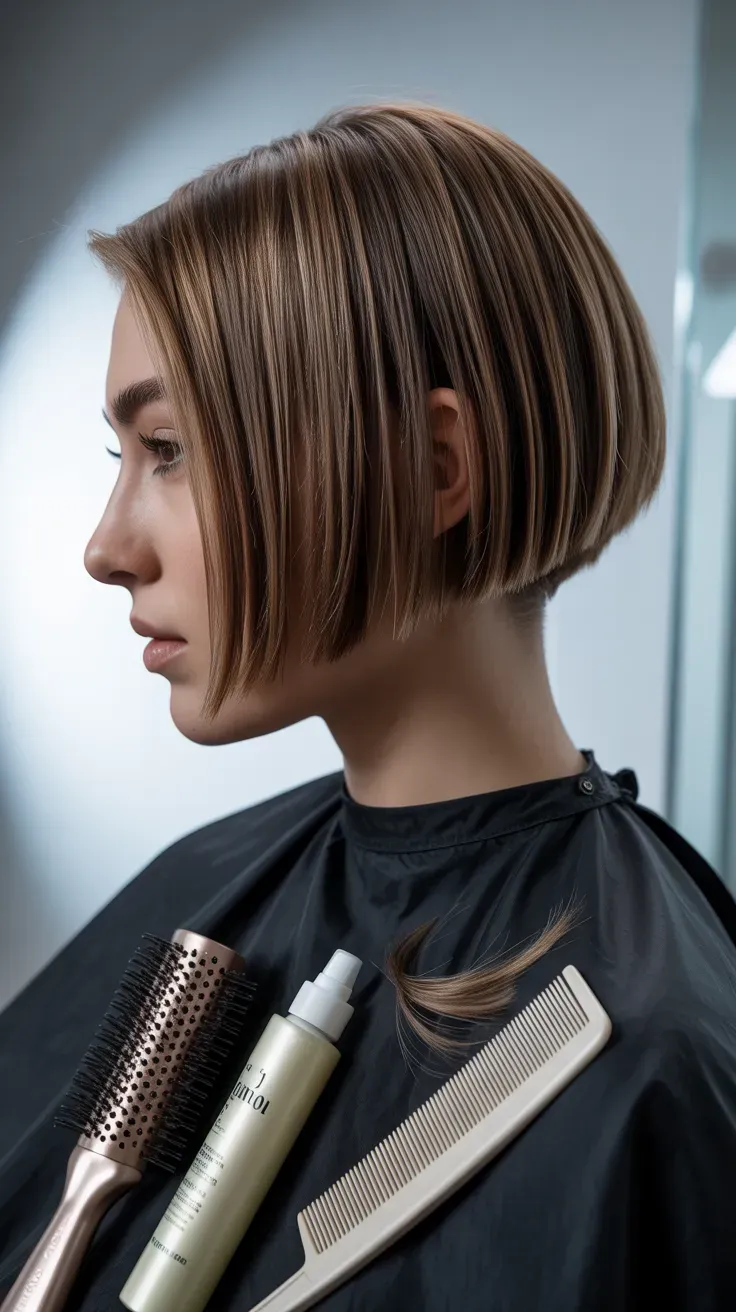
Why it works: Stacking layers at the back builds physical bulk exactly where fine hair usually looks thin and see-through, so the silhouette appears rounder and fuller from the side. The graduation also adds movement that a flat, one-length cut lacks.
Ask for: Ask for “graduated stacking at the back, 2 to 3 layers deep, blended into a longer front.”
14. Feathered Pixie
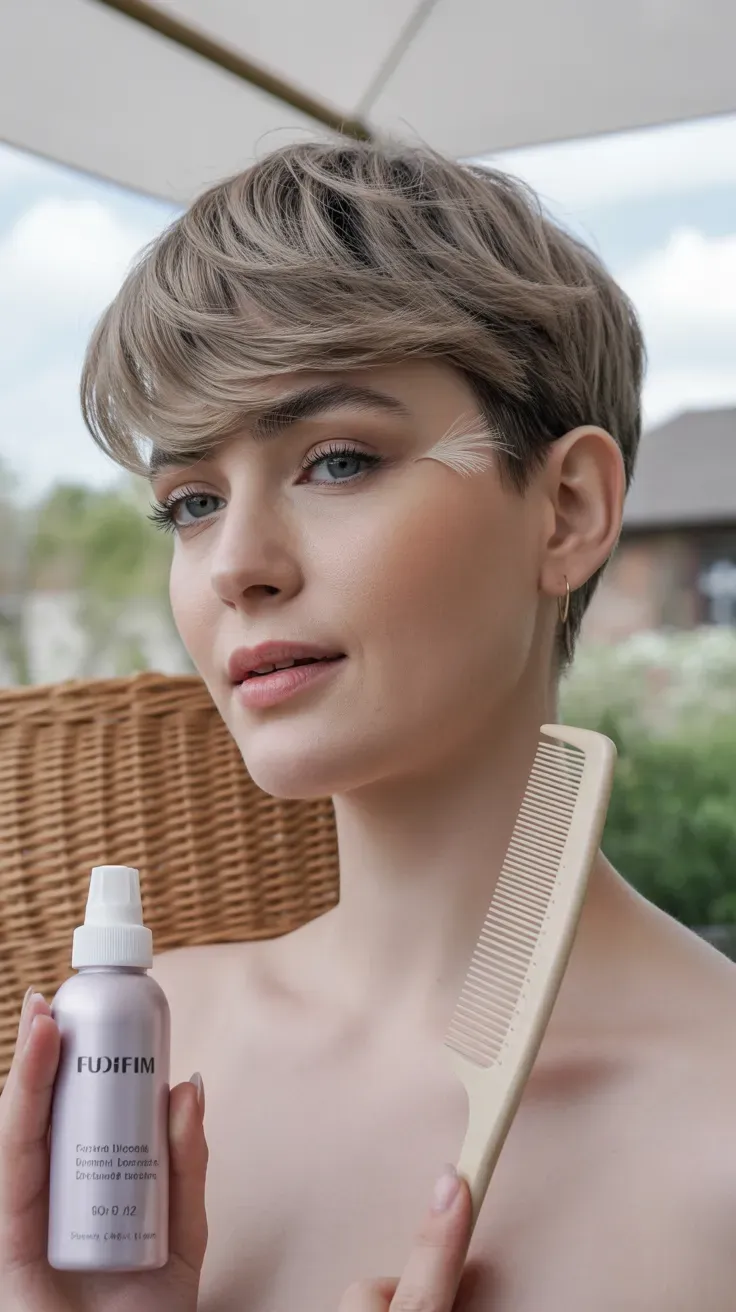
Why it works: Feathered layers are cut to flick outward rather than lie flat, which gives fine hair the appearance of extra thickness at the ends without needing more length. The softness around the face also balances a thinner hairline.
Ask for: Ask for “feather-cut ends using point-cutting technique, styled with a light mousse.”
15. Bob with Micro Fringe
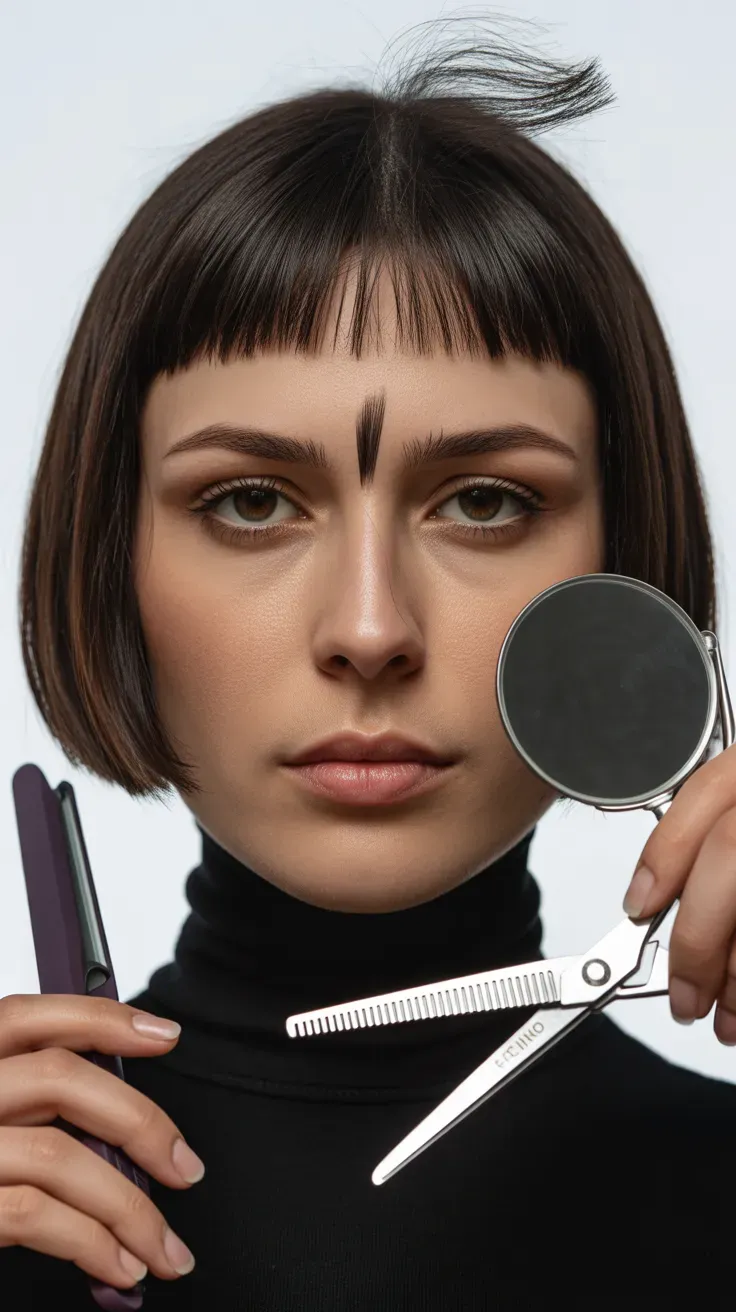
Why it works: A short, blunt micro fringe carries visual weight right at the hairline, making sparse or fine baby hairs less noticeable while adding an instant focal point to the face. The sleek bob length keeps the rest of the style controlled and neat.
Ask for: Ask for a “blunt micro fringe cut just above the brow bone, kept dry-cut for precision.”
16. Soft Rounded Bob
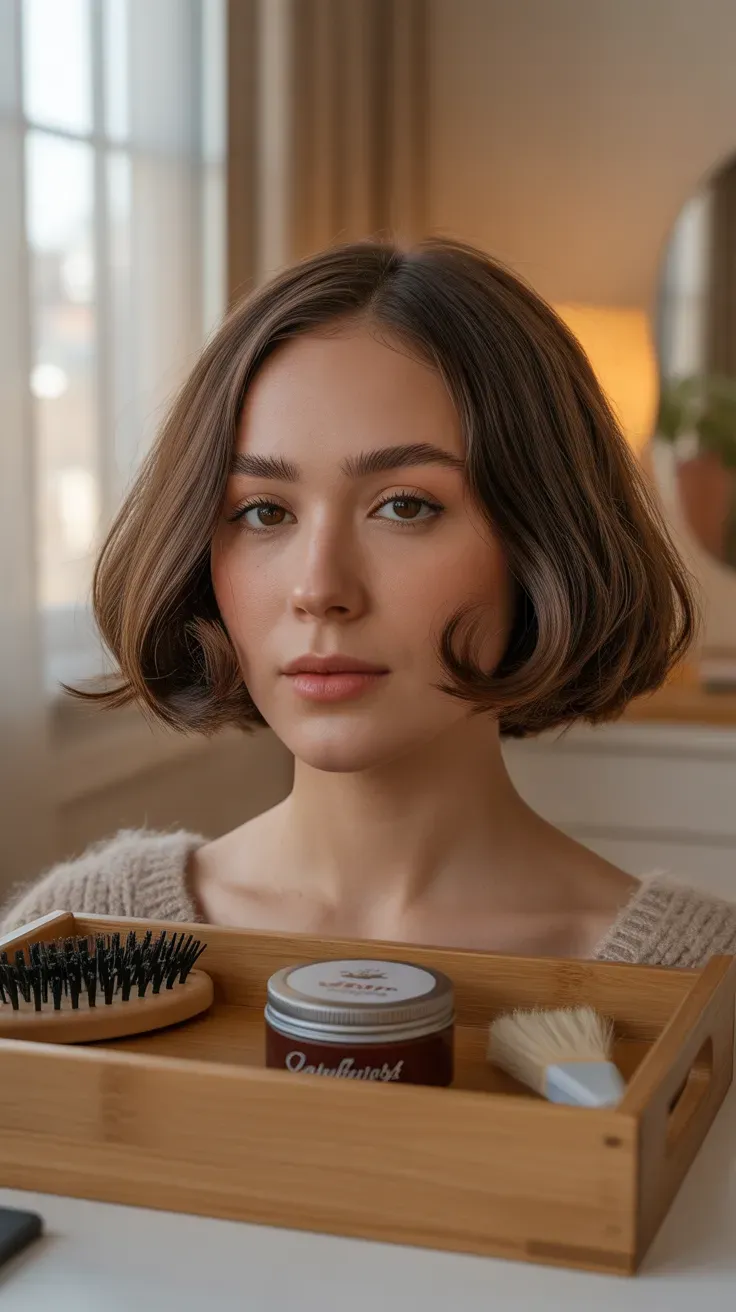
Why it works: The rounded, inward-curled shape creates a fuller silhouette along the jawline, which balances out thinning strands that often show most at the perimeter. It also keeps the ends looking healthy rather than wispy.
Ask for: Ask for a “round-brush blowout curling the ends under, with a light-hold spray to set the shape.”
17. Textured Undercut Pixie
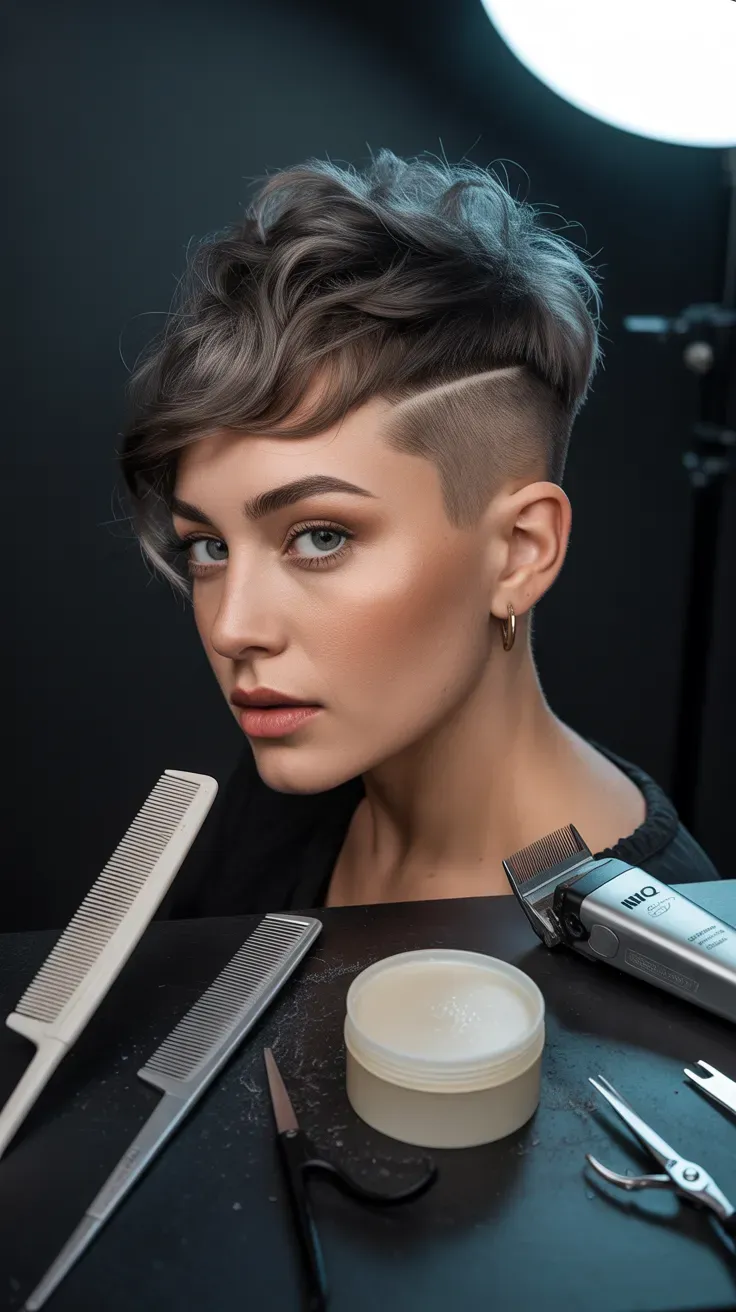
Why it works: Shaving the underlayer removes bulk exactly where fine hair tends to look thin and wispy against the neck, while leaving the top longer concentrates visible density in one area. This contrast makes the overall style look intentional rather than sparse.
Ask for: Ask for “a close undercut at the nape, blended into a longer textured top.”
18. Short Shag with Bangs
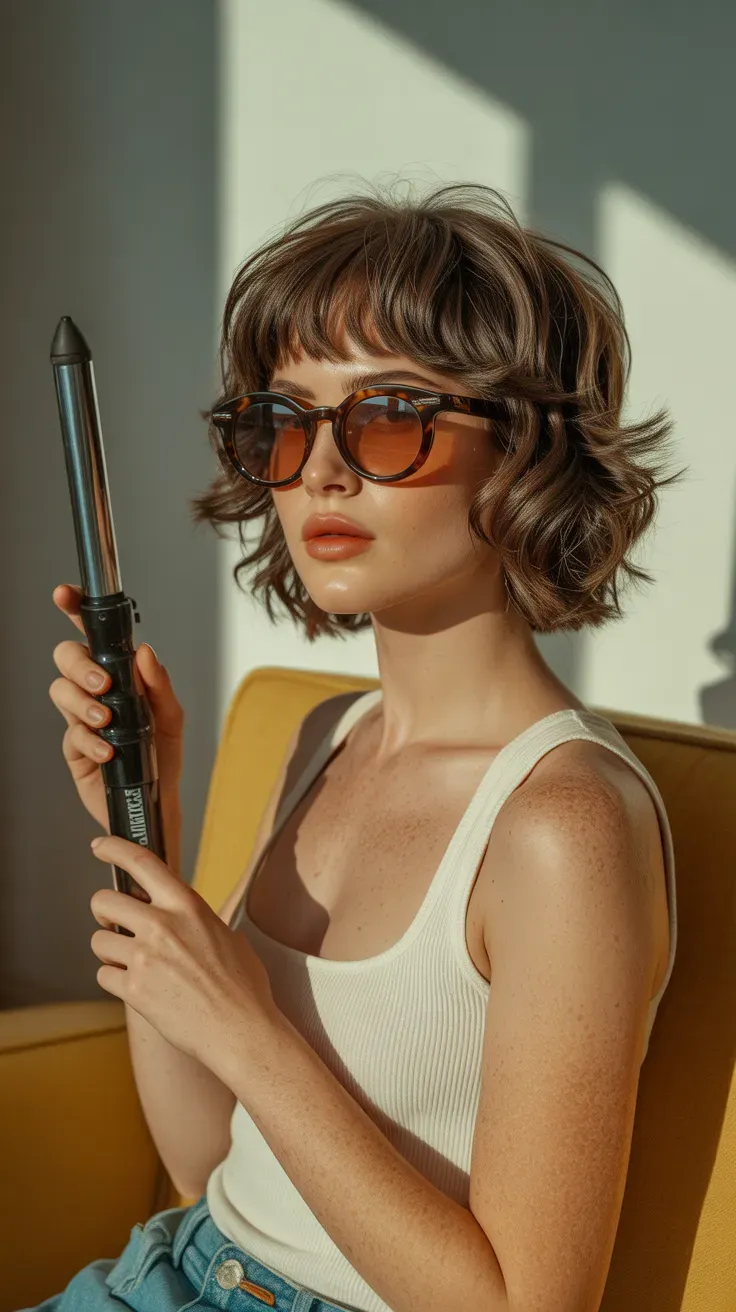
Why it works: Wispy, piecey bangs sit lighter than a full fringe, so they add movement and dimension without weighing fine hair down or making the front look heavy and flat. The layered shag body underneath keeps everything else from falling into one dense sheet.
Ask for: Ask for “wispy, point-cut bangs paired with heavy shag layering through the crown.”
19. A-Line Bob
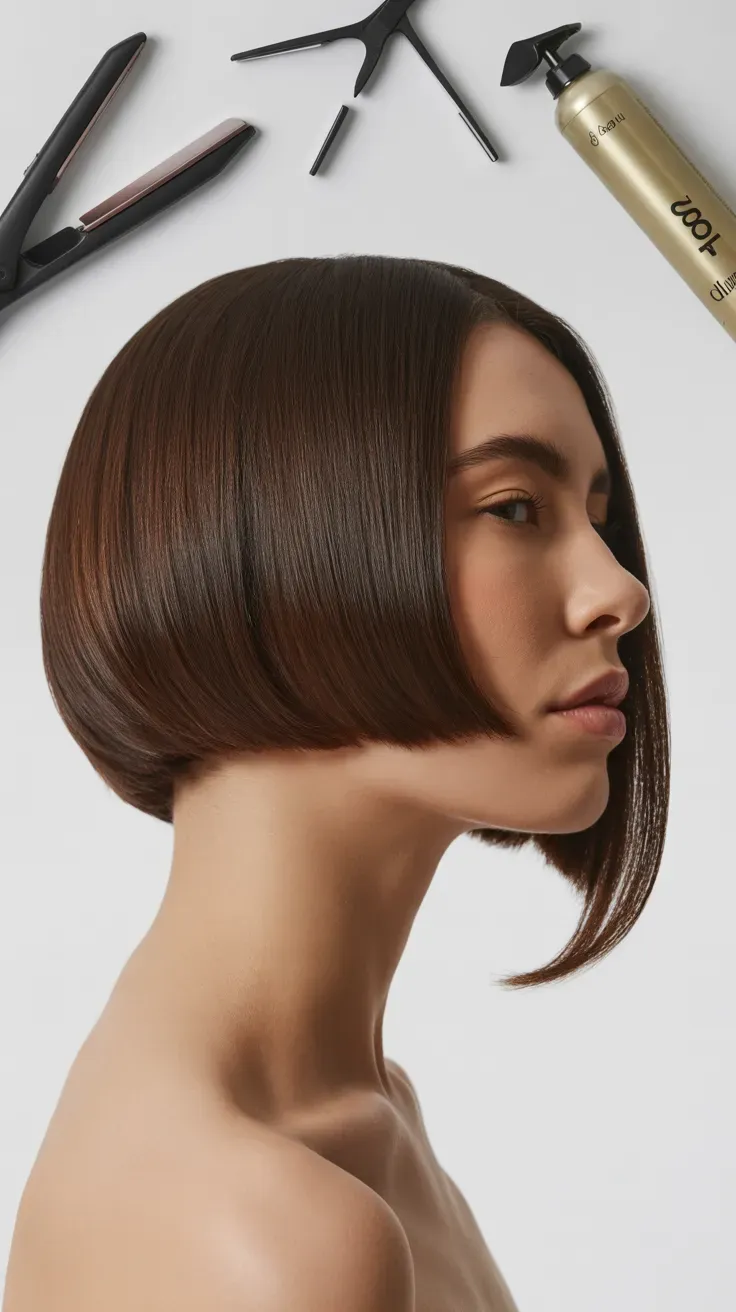
Why it works: The steep angle from short at the back to long at the front concentrates hair’s natural density toward the face, which is where volume matters most for a flattering look. The sharp line also gives fine hair a defined edge instead of a wispy, fading-out end.
Ask for: Ask for “an A-line cut with at least a 3-inch length difference from back to front.”
20. Choppy Pixie
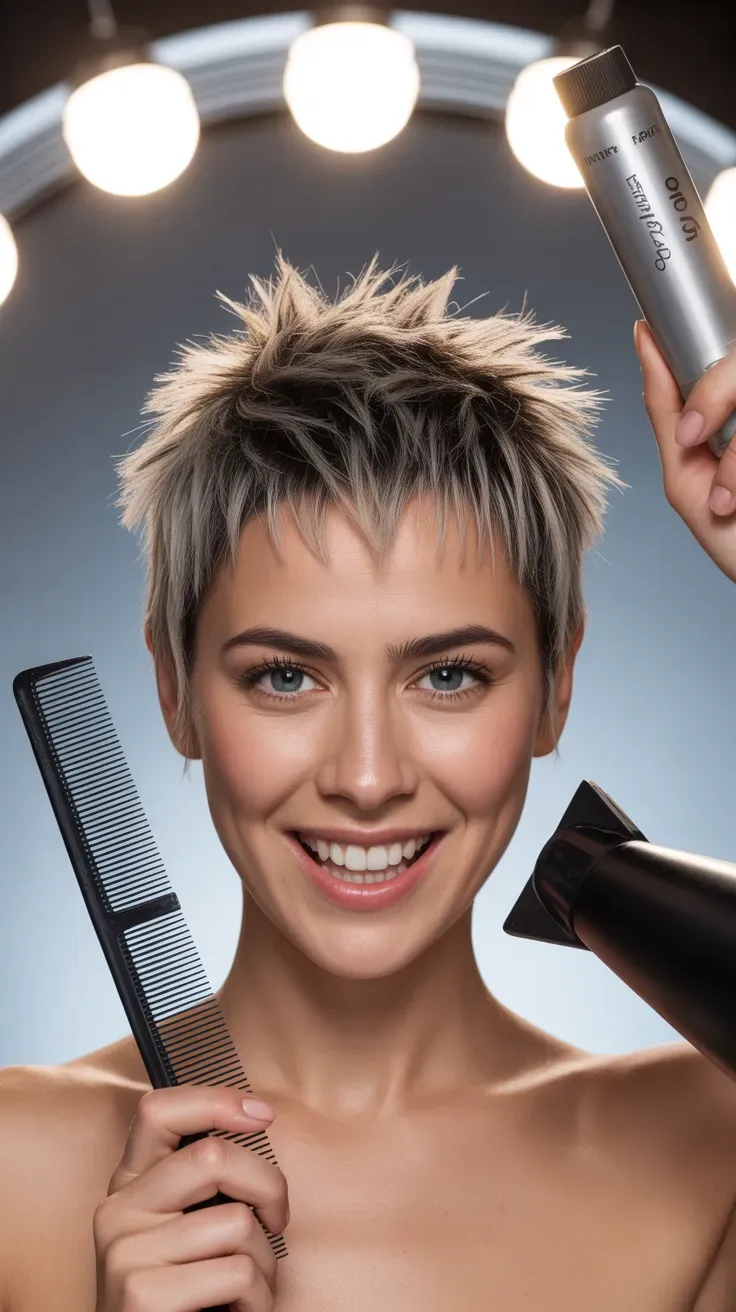
Why it works: Styling fine hair upward and outward in choppy pieces works with gravity instead of against it, since short spiky sections hold their shape far longer than hair styled to lie flat. The uneven texture also disguises any patchiness in strand thickness.
Ask for: Ask for it “point-cut throughout and styled upward with a strong-hold texturizing gel.”
21. Ear-Length Micro Bob
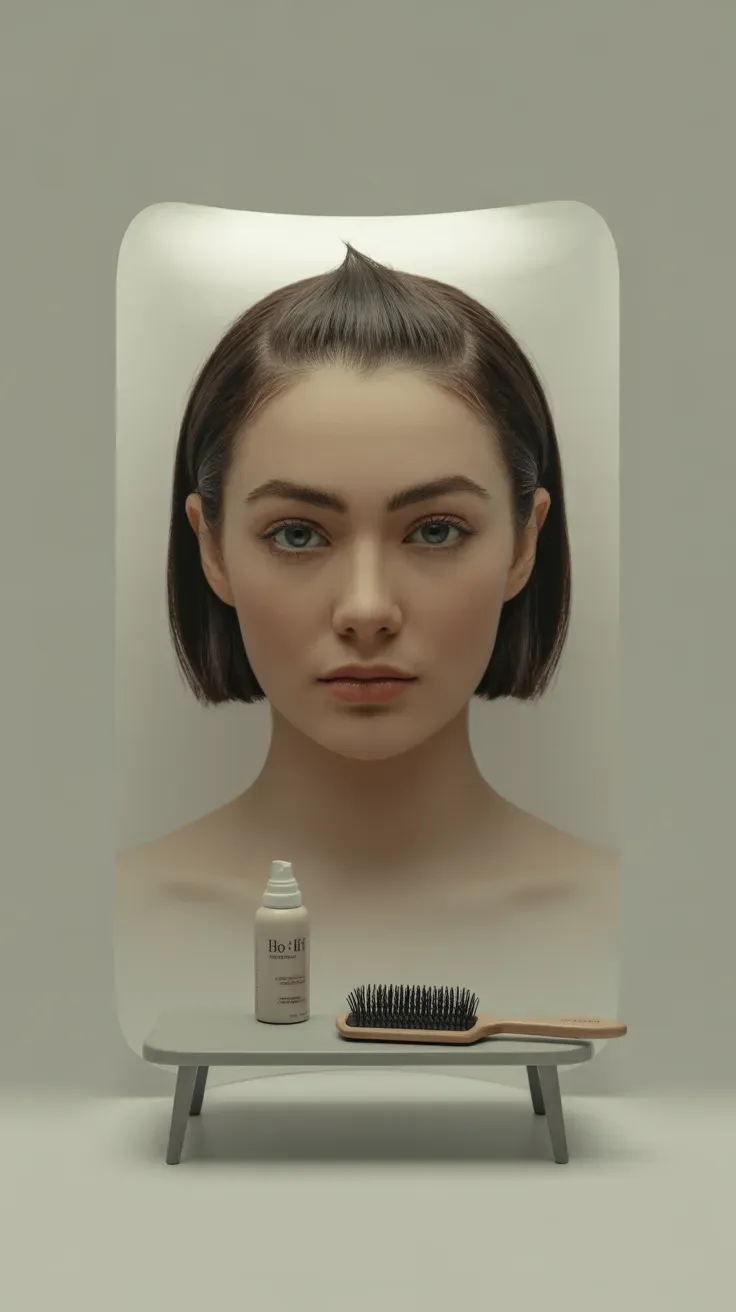
Why it works: This ultra-short length keeps hair close to the head where it’s naturally densest, avoiding the long, thinning ends that make fine hair look wispy. Lifted roots at this length also hold shape all day without constant restyling.
Ask for: Ask for a “micro bob cut just above the ear, with roots blow-dried lifted using a root clip.”
22. Textured Bob with Deep Side Part
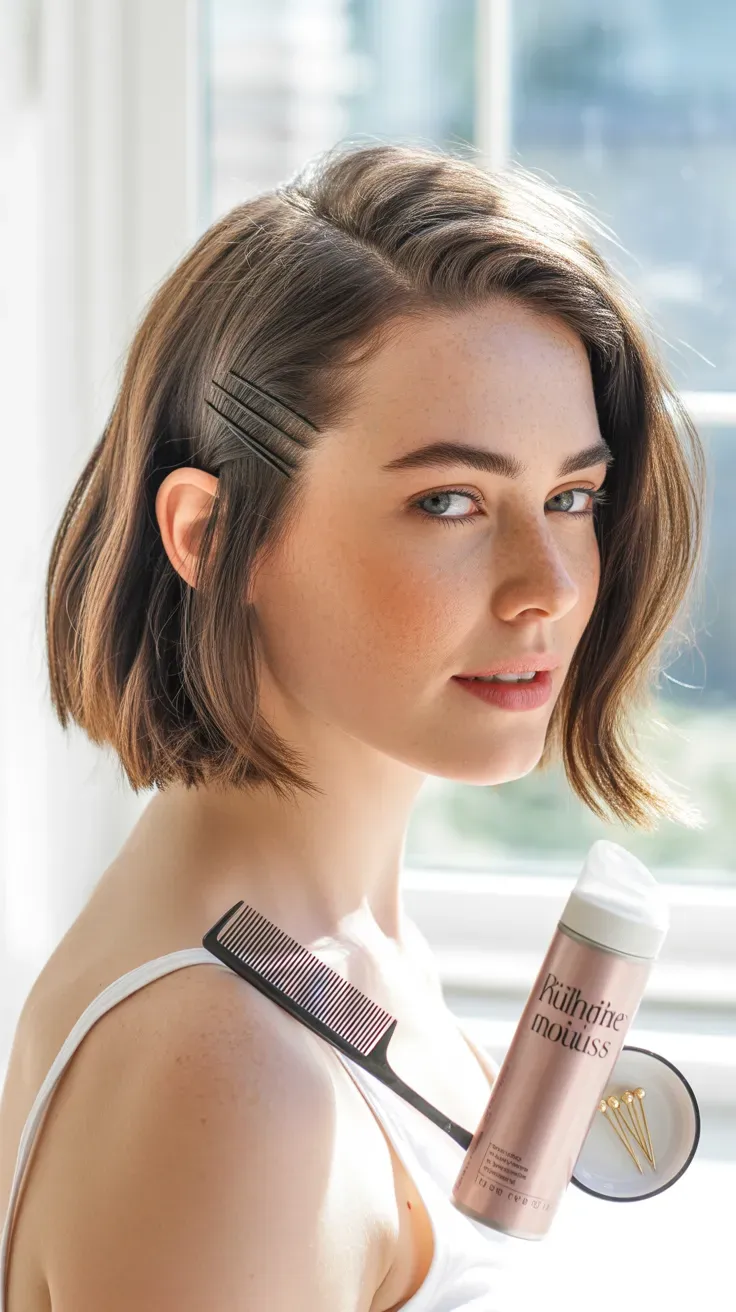
Why it works: A deep side part shifts more hair to one side, doubling up strands where they part and instantly creating the look of extra density at the root. Pairing it with texture keeps the rest of the cut from looking flat by comparison.
Ask for: Ask your stylist to “cut the part in permanently on a deep angle rather than a center part.”
23. Curly Pixie
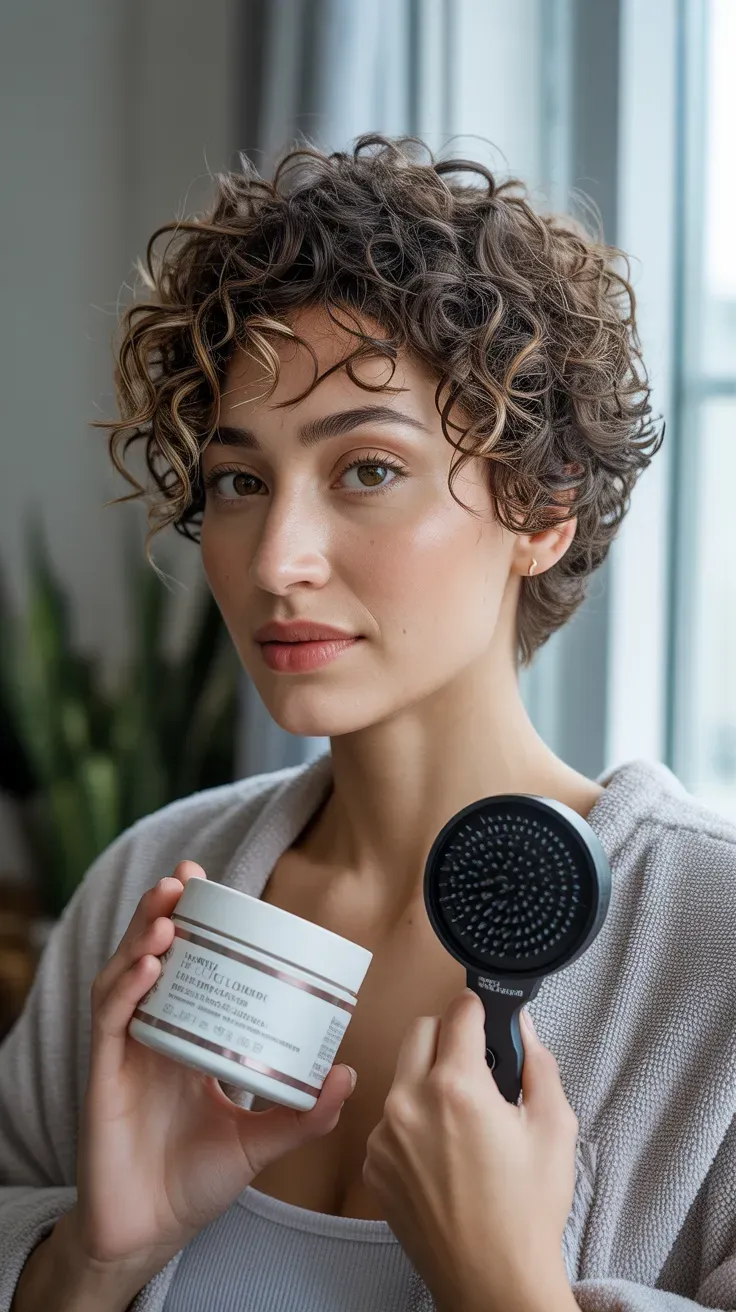
Why it works: Natural curl pattern adds dimension and spring that straight fine hair simply can’t replicate, making each curl appear thicker than the strand actually is. Cutting it short also prevents curls from stretching out and losing shape under their own weight.
Ask for: Ask for a “dry cut shaped curl by curl, with a lightweight curl cream applied on damp hair.”
24. Sleek Chin Bob

Why it works: A flat-ironed, glass-like finish maximizes shine, and shine reflects light in a way that visually reads as healthy, dense hair even on fine strands. The uniform chin length also keeps every strand ending at the same weight line for a fuller edge.
Ask for: Ask for the ends to be “flat-ironed with a shine serum for a glass-like, blunt finish.”
25. Bob with Face-Framing Layers
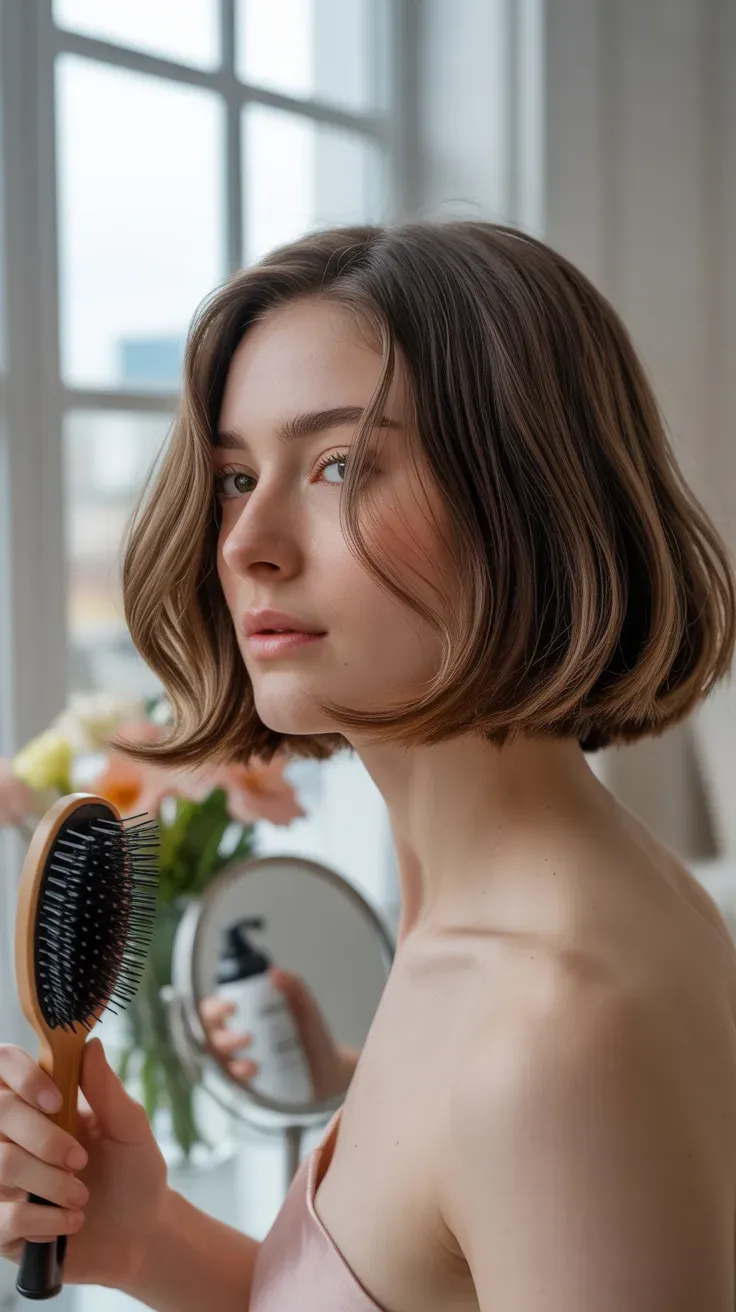
Why it works: Layers cut specifically around the face add shape and dimension right where the eye naturally looks first, drawing attention away from any thinning at the crown or part. The soft curve also flatters bone structure without needing extra length.
Ask for: Ask for “layers starting at the cheekbone, curved inward and blended into the length.”
26. Short Layered Crop
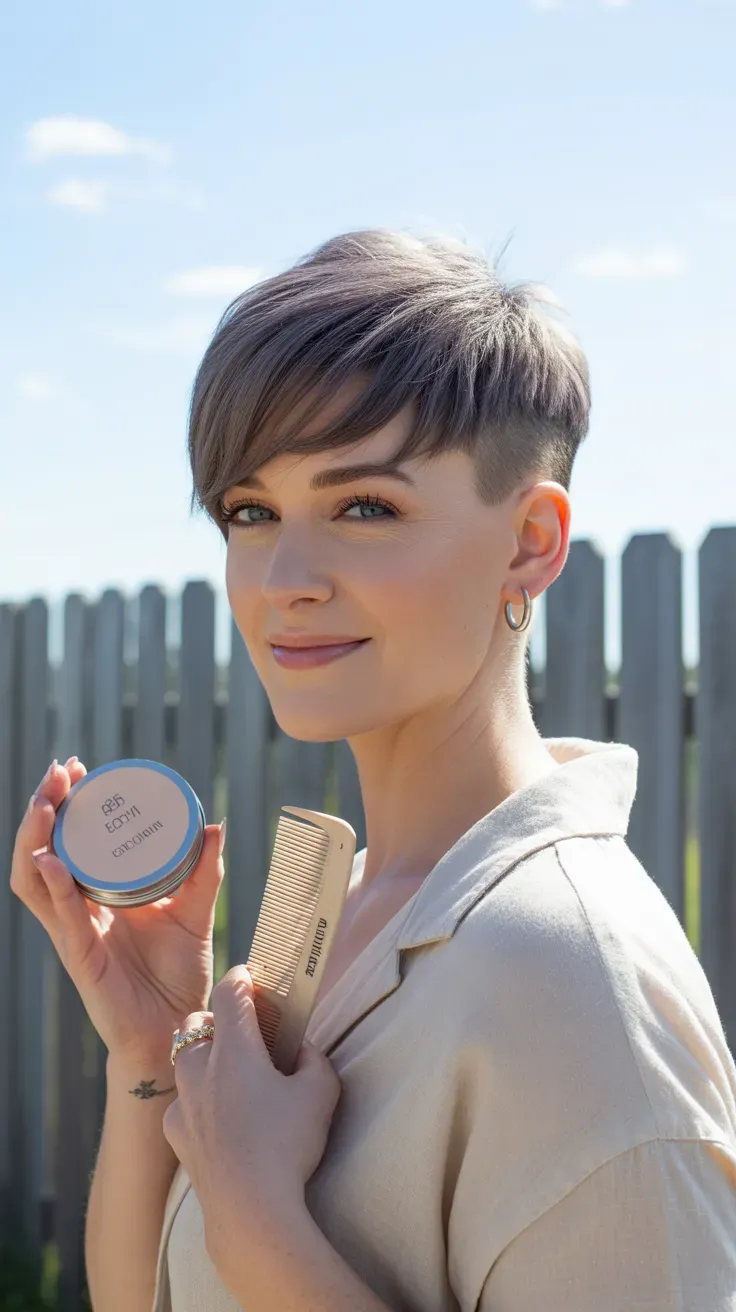
Why it works: Layering concentrated at the crown lifts hair right at the root, which is the single most effective place to add the appearance of volume on fine hair. The tapered sides keep the overall shape neat instead of bulky.
Ask for: Ask for “shorter layers concentrated at the crown, using a texturizing powder to hold the lift.”
27. Wavy Bob with Volume Blowout
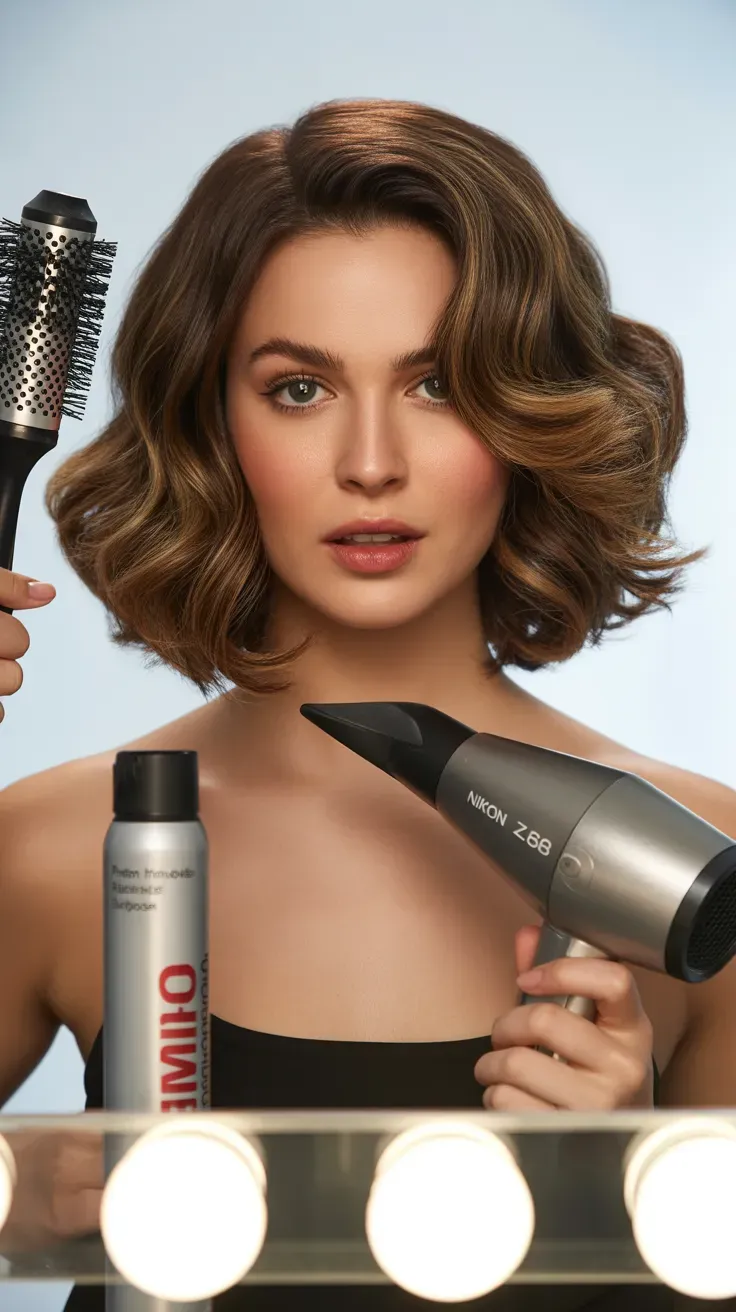
Why it works: Blow-drying with a large round brush lifts the roots and adds a soft outward curve at the ends, both of which trick the eye into seeing far more volume than fine hair naturally holds. The loose waves also add textural bulk throughout.
Ask for: Ask your stylist for “a round-brush blowout with the roots lifted and ends curled outward, set with mousse.”
28. Angled Bob
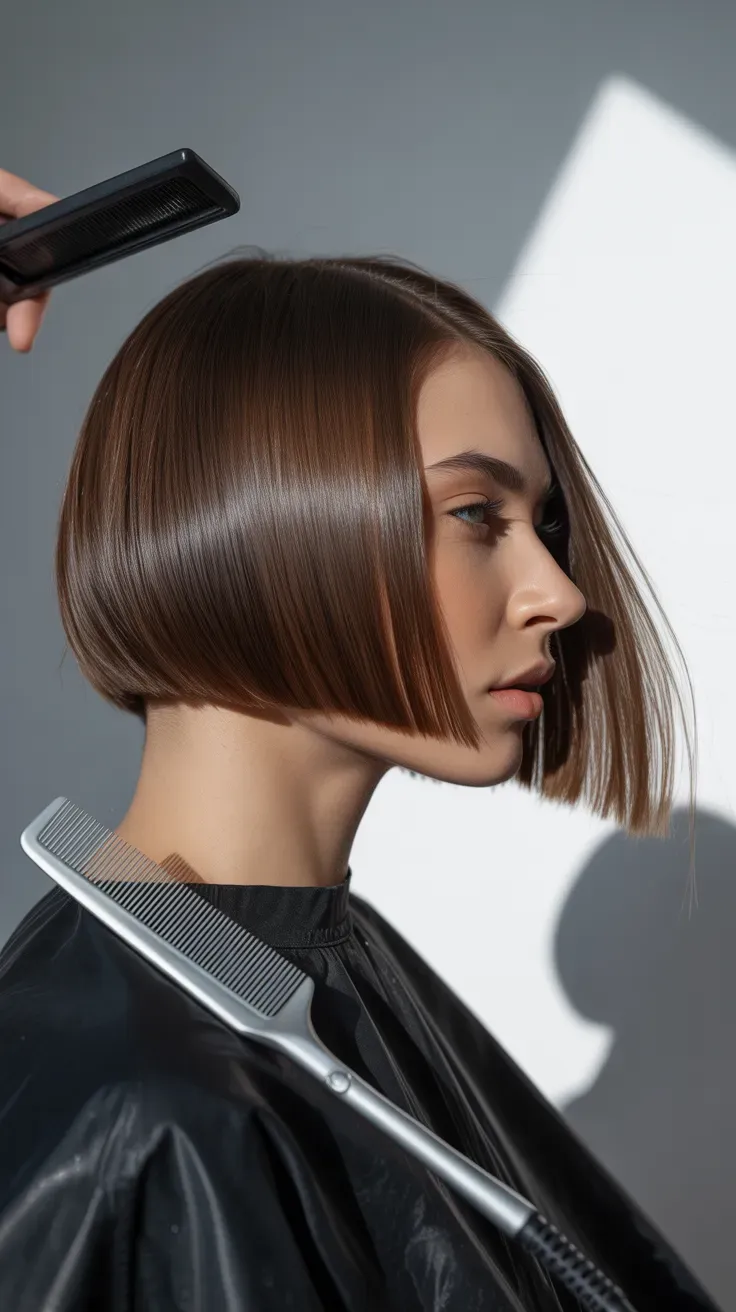
Why it works: The sharp diagonal line of an angled bob is a strong graphic shape that reads as intentional and structured rather than thin, since the eye follows the clean angle instead of noticing gaps in density. It also builds length and weight toward the front where it’s most flattering.
Ask for: Ask for “a steep angled bob with the line cut on a diagonal from ear to chin.”
29. Cropped Shag
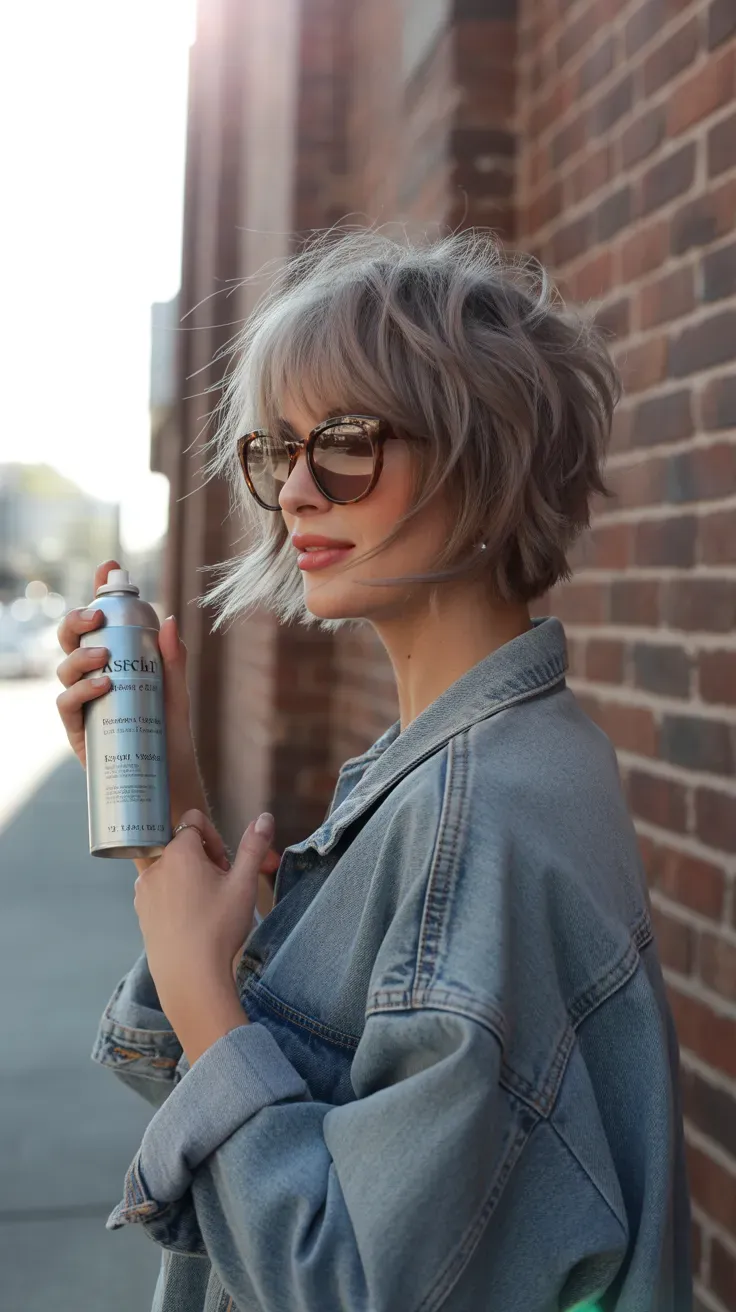
Why it works: Heavy, choppy layering throughout a cropped shag breaks the hair into many shorter pieces, and each shorter piece holds its own shape rather than collapsing under the weight of longer strands. This keeps fine hair looking textured rather than sparse.
Ask for: Ask for “disconnected shag layers, razor-textured, styled with a dry texturizing spray.”
30. Textured Pixie with Long Bangs
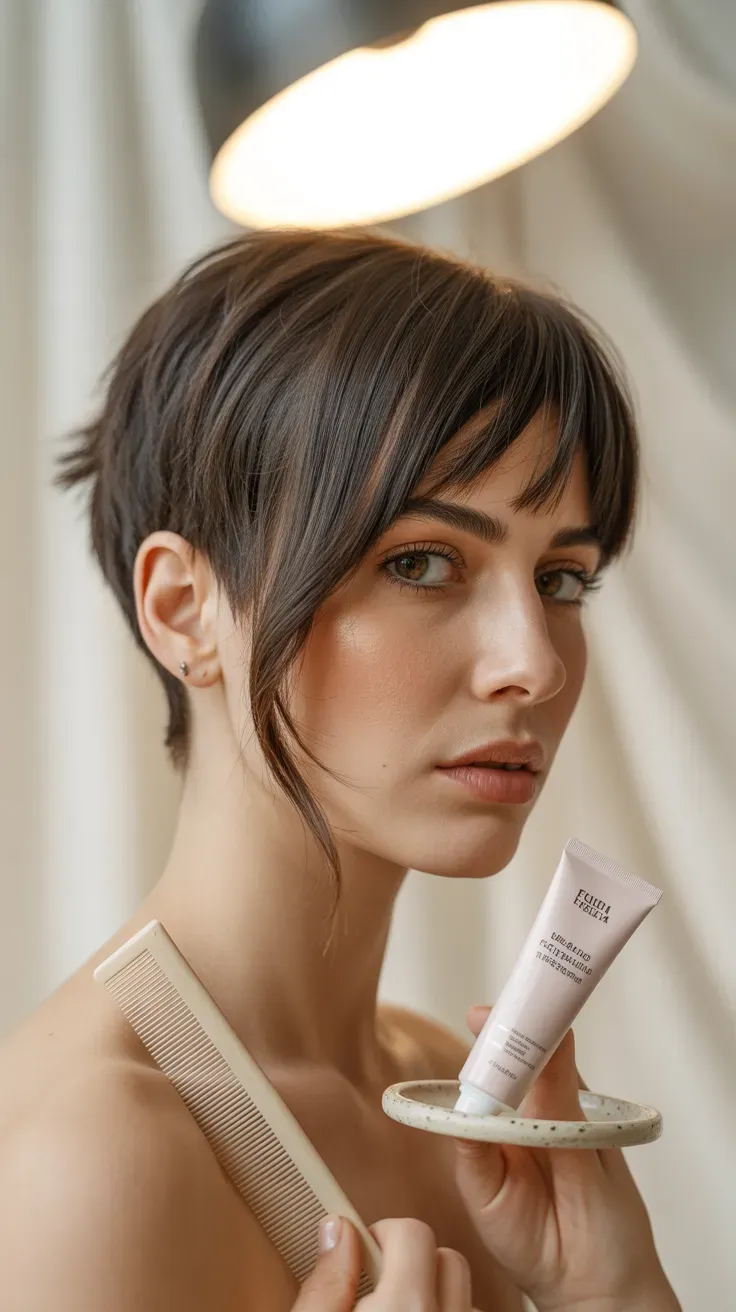
Why it works: Keeping the bangs long and swept to the side gives fine hair one area of visible length and movement, balancing the short cropped sections elsewhere so the whole style doesn’t read as uniformly thin. The textured crop underneath keeps the rest of the shape light and easy to manage.
Ask for: Ask for “long side-swept bangs left uncut through the cheekbone, blended into a textured pixie base.”
FAQs
What’s the best short hairstyle for thin, fine hair? A textured bob, a longer-layered pixie, or a wolf cut tend to work best for thin, fine hair because they build in volume through layering and texture rather than relying on length. All three keep hair close enough to the head to avoid looking weighed down while still giving you styling options.
How to make thin, fine hair look fuller for everyday wear? Try lifting the roots while blow-drying with a round brush pointed upward, and use a lightweight volumizing spray at the roots rather than a heavy product that can weigh strands down. A deep side part also helps, since it doubles up hair at the parting line for instant lift.
Are updos good for thin, fine hair? Updos can work well for fine hair since pinning strands up adds the illusion of body, especially with some backcombing at the crown first. That said, very tight or sleek updos can look thin and flat, so a slightly loose, textured updo will generally look fuller than a slick one.
Wrap-Up
At the end of the day, the styles that flatter thin, fine hair the most all lean on the same three things: shape that holds its own weight, softness that adds movement, and layers placed exactly where volume is needed most. Whichever of these 30 you gravitate toward, let your daily routine and how much styling time you actually enjoy guide the final pick.